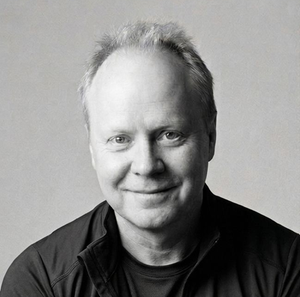
The Null Archive is Carsten Trojan’s debut novel. As the subtitle, “A World War II Codebreaking Thriller,” suggests, cryptography plays an important role in this book. I spoke with the author about it.
Cipherbrain: What is the Null Archive, and how does it relate to encryption?
Trojan: In the novel, the Null Archive is a hidden chain of evidence spread across various locations and information carriers. It contains traces of events from the war and postwar periods that extend into the present. Traditional documents and punched tape play just as much a role as architectural details that one must first learn to interpret correctly. Encryption protects this information on the one hand, but on the other hand, it can actually open up access to it. A key theme here is the reuse of key material: what should technically be secure becomes vulnerable due to a human decision. This immediately raises not only a technical question but also a political one: Who is allowed to read this information, who controls it – and what happens if it becomes public?
Cipherbrain: What is the novel about, and what role does encryption play?
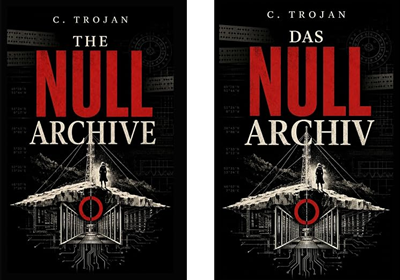
Trojan: Berlin, 2026: Architect Liv Voss finds her mentor, archive director Sebastian Kohl, dead. However, a small architectural detail at the scene contradicts the official explanation that it was an accident. A component from a historic Lorenz cipher machine and mysterious coordinates lead Liv down a trail that begins in 1943 at a German weather station in East Greenland and extends through Bletchley Park and neutral Lisbon all the way to the present day. Together with IT security specialist Kwame Mensah, Liv tries to uncover what was hidden back then and why it is once again life-threatening today. Cryptography serves as the link between the different time periods: old keys and intercepted messages become clues pointing to a highly topical technical vulnerability. For Liv, the search also takes on a very personal dimension when she realizes that her father’s unexplained disappearance is connected to this story.
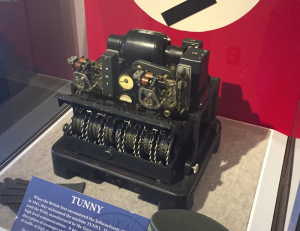 A Lorenz cipher machine
Cipherbrain: Is the Null Archive purely fictional, or is there a grain of truth to it?
Trojan: The Null Archive itself, the specific media used to store its information, and the specific conspiracy are fictional. The historical background, however, is entirely real: the Lorenz cipher machine and its decryption by the British, the secret German weather stations in the Arctic, and Lisbon’s role as a neutral hub for communications and a place of refuge during World War II. The fundamental cryptographic problem underlying the story is also historically documented. When different messages are encrypted using the same key sequence, patterns emerge between the plaintexts. In the actual breakthrough against the Lorenz system at Bletchley Park, such repeated transmissions with identical settings played a decisive role. The connection to the Null Archive and to modern security systems, in turn, is part of my novel’s plot. A detailed historical appendix in the book clearly separates the documented facts from the fiction.
Cipherbrain: Was Neal Stephenson’s Cryptonomicon a source of inspiration?
Trojan: I’ve read the novel, but it wasn’t a direct inspiration for my book. The comparison is naturally obvious given the intertwining of the two time periods and the central role of cryptography. What I really appreciate about Neal Stephenson is how effortlessly he makes complex technical ideas the driving force of the plot. In The Null Archive, however, the narrative is largely driven by the perspective of an architect who recognizes contradictions in built structures, and by the question of just how reliable the material traces of the past actually are. What fascinates me most is the point at which human behavior itself undermines even the most secure systems.
Cipherbrain: Was it clear from the start that encryption would play a role?
Trojan: At first, the focus was more on searching for architectural clues; the topic of cryptography only emerged as the perfect connecting link during the conceptual phase. Both worlds align closely with my own professional perspective as an architect. I’m used to comparing what’s actually there with what should be there from a structural standpoint. A structure that’s been altered after the fact or a mismatched screw can point to a hidden history of construction and use. It is precisely this trained eye that becomes Liv’s decisive tool in her investigations. In cryptography, I encounter the same principle: the interplay between visible clues and the hidden rules behind them. In the novel, this directly raises the question of who can hide, manipulate, or decrypt information. The technology therefore remains not an abstract puzzle, but has tangible consequences for the characters and the course of the story.
Cipherbrain: What research on encryption technology was necessary? What sources did you use?
Trojan: It was important to me that both the mechanics of the Lorenz machine and the actual limitations of cryptanalysis be portrayed in the novel with precision and clarity. This includes the five pulses of the Baudot teletype code, the twelve wheels of the Lorenz cipher machine, and, above all, the mathematical consequences of a keystream used twice. Equally important to me was distinguishing between an initial technical breakthrough and the painstaking human analysis work that still had to be done afterward: Even the famous Colossus computer at Bletchley Park didn’t simply produce finished plaintext at the push of a button.
My sources are disclosed in the historical appendix, along with a bibliography. For the Lorenz machine, the British codename “Tunny,” and Colossus, I draw, among other things, on documentation from the National Museum of Computing, the technical analyses of the Virtual Lorenz project, and declassified material from the NSA. The historical context regarding the Arctic is supplemented by sources from the U.S. Coast Guard Historian’s Office, an archaeological-historical study by Jens Fog Jensen and Tilo Krause on the German weather stations in northeastern Greenland, and accessible records from American and British archives. The appendix invites readers to explore these real-world backgrounds further on their own – while at the same time drawing a clear line where my fictional messages, characters, and plotlines begin.
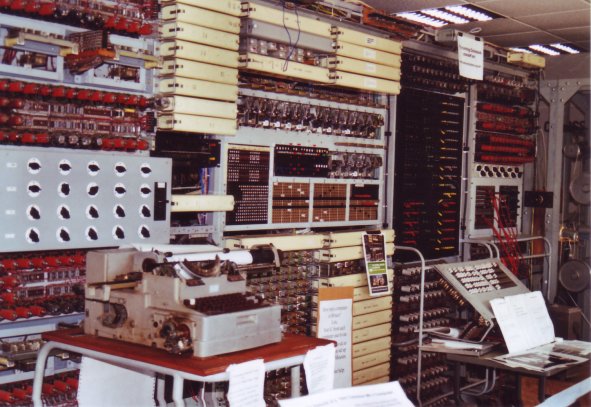 Colossus, the machine that broke the Lorenz cipher in WWII
Cipherbrain: What can people interested in encryption look forward to in particular?
Trojan: In particular, the Lorenz machine, teletype communications operating under the British codename “Tunny,” work with punched tape, and the very practical cryptanalysis of key repetitions. In a pivotal scene, the characters work with two intercepted ciphertexts that partly share the same keystream. Where the same keystream is used, XORing the corresponding parts of the two ciphertexts cancels out that keystream. What remains is the XOR of the two unknown plaintexts, not immediately readable text. From this point on, the actual detective work begins, based on probable words, hypotheses, and systematic testing.
At the same time, in the novel, architecture itself becomes a data carrier: structural patterns and the smallest interventions preserve information over decades. On the contemporary level, current questions about data integrity and the dramatic consequences of a disclosed security vulnerability are added to the mix. This close interweaving of technical analysis and personal responsibility drives the suspense – though you by no means have to be a cryptographer yourself to follow the discoveries step by step.
Cipherbrain:What lessons can we draw from this story for our present and future?
Trojan:At its core, the novel is about how manipulation from the past threatens modern security systems decades later. We can apply this idea directly to our current situation: We are currently laying the technological foundation for our future with artificial intelligence and feeding these systems enormous amounts of data. But what happens if these training datasets contain unnoticed errors, distortions, or even deliberate manipulations? Just as with a compromised key in cryptography, such vulnerabilities become invisibly embedded in the system. We will then rely in the future on results and structures whose blind spots we will hardly be able to reconstruct in hindsight.
Cipherbrain: Where can I buy The Null Archive?
Trojan: The Null Archive and Das Nullarchiv are available on Amazon as a paperback and as a Kindle e-book. There is also a German-language audiobook version – available at Thalia and Audible, among others – produced with AI-powered voices from ElevenLabs. I’ve compiled all the information about the book, along with free reading and audio samples, on my website: https://www.hybride.de/the-null-archive.
Back to Cipherbrain Blog