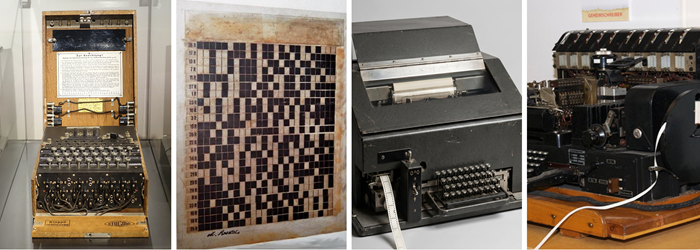
German ciphers in World War II
During the Second World War, Germany employed a wide variety of cryptographic systems. For highly important communications – particularly military messages – cipher machines were used. While some of these devices saw extensive operational service, others never progressed beyond the prototype stage.
For communications of lesser importance, a range of manual ciphers and encryption tools provided practical and effective security. In addition, German intelligence services employed several steganographic techniques that allowed spies to conceal secret information within seemingly innocent messages or objects.
This gallery provides an overview of these cipher machines, manual systems, and steganographic methods.
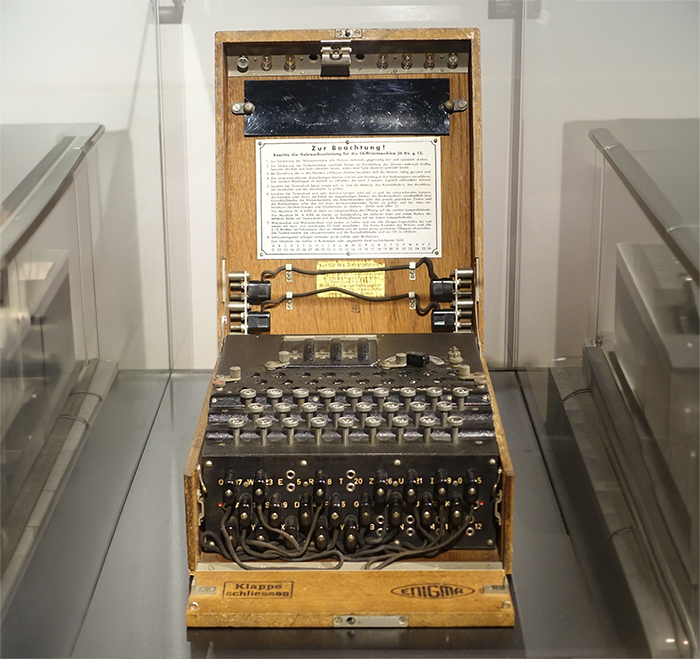
The Enigma is by far the best-known cipher machine in history. It was used extensively by the German military during the Second World War, primarily to encrypt messages transmitted by Morse code over radio networks.
As is well known, the Enigma system was broken thanks to the pioneering work of Polish cryptologists, whose work was later continued and expanded by British codebreakers at Bletchley Park.
Source: Wikimedia
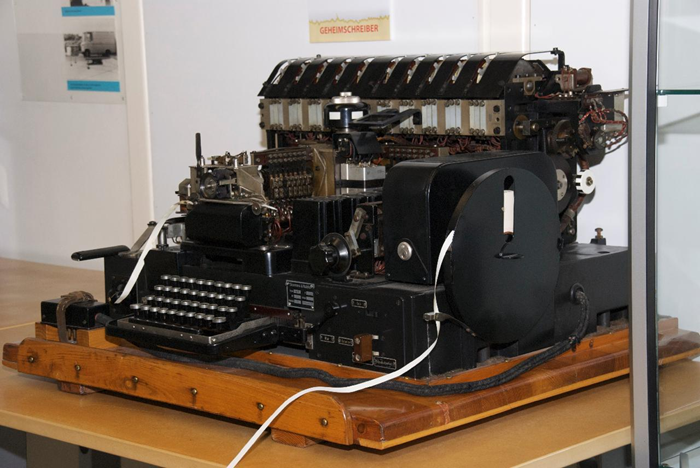
The Siemens & Halske T52, commonly known as the Geheimschreiber (“Secret Teleprinter”), was designed to encrypt teleprinter traffic. It used a sophisticated system of cipher wheels and electrical logic. Early versions of the Geheimschreiber were broken by Swedish cryptanalyst Arne Beurling.
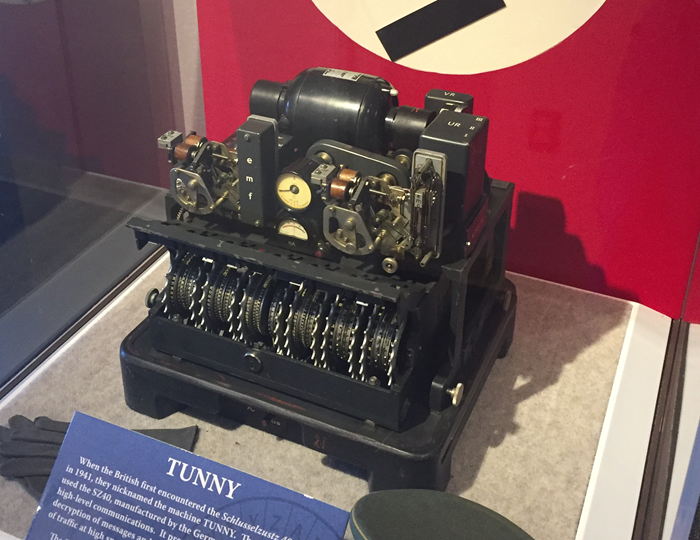
The Lorenz Schlüssel-Zusatz, commonly known as the Lorenz Machine, was a teleprinter cipher system used by the German High Command during the Second World War. It employed a system of rotating wheels to encrypt teleprinter signals automatically.
The Lorenz Machine was broken by British cryptanalysts at Bletchley Park, leading to the development of Colossus, a forerunner of the computer.
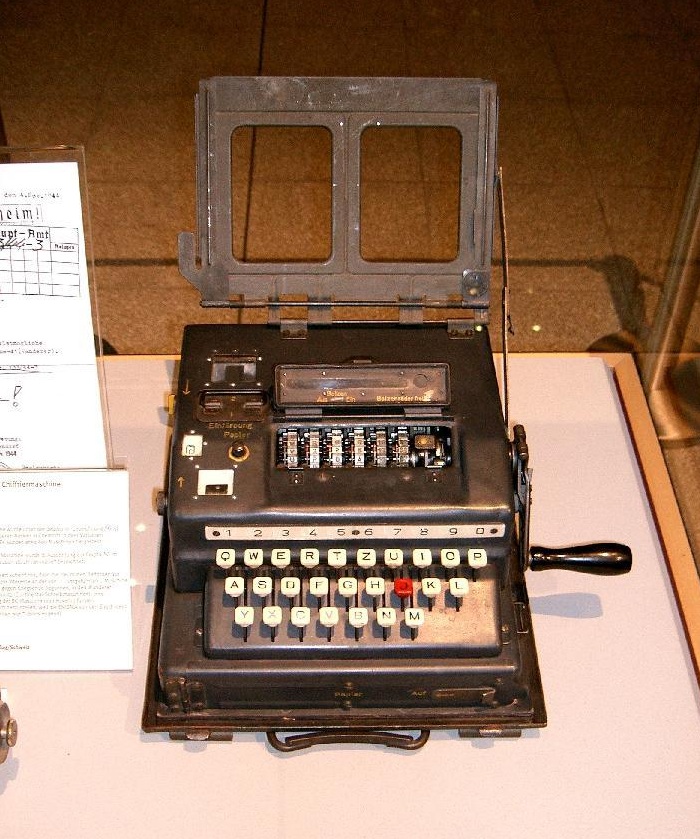
The Schlüsselgerät 41 (SG-41), commonly known by the nickname “Hitler Mill” (Hitlermühle), was designed as the successor to the Enigma machine. However, only a few hundred machines were produced before the end of the war, and it never replaced the Enigma on a large scale.
With the cryptanalytic techniques and computing resources available during the war, the SG-41 is generally believed to have been secure against practical cryptanalysis during the war.
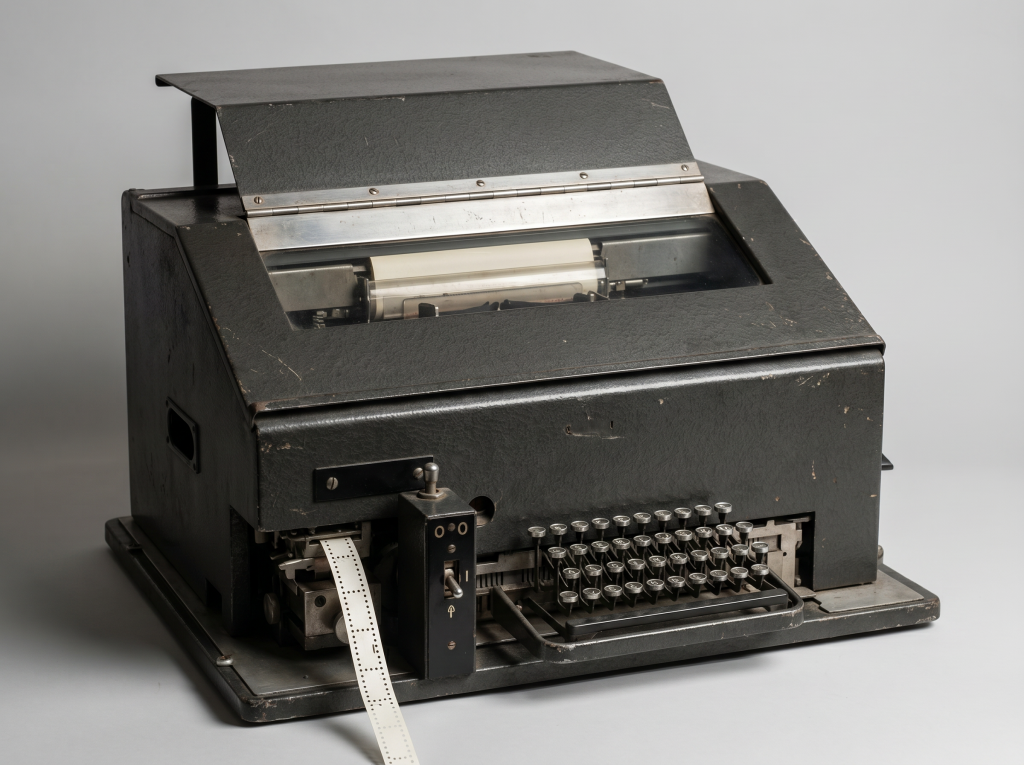
The Siemens & Halske T43 was an advanced teleprinter cipher machine. It was designed to provide a higher level of security than earlier teleprinter encryption systems with the cryptographic principles of a one-time tape.
Source: AI-generated
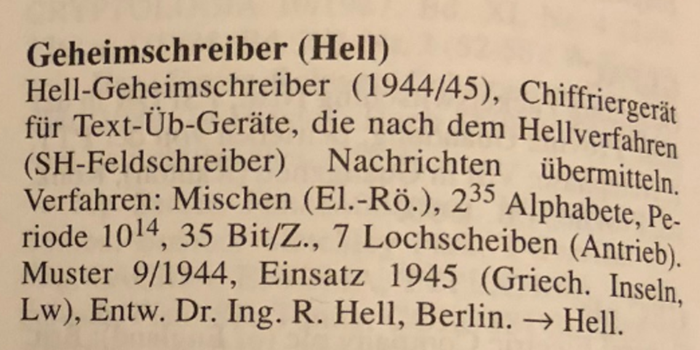
The Hell Geheimschreiber was a device designed to encrypt messages transmitted using the Hellschreiber system. Only a single reference to this machine is currently known: the accompanying entry in Wolfgang Mache’s Lexikon der Text- und Datenkommunikation (1980). No further documentation has been found, and its appearance and method of operation remain unknown. As a result, the Hell Cipher Machine is one of the most enigmatic devices in the history of cryptographic communications.
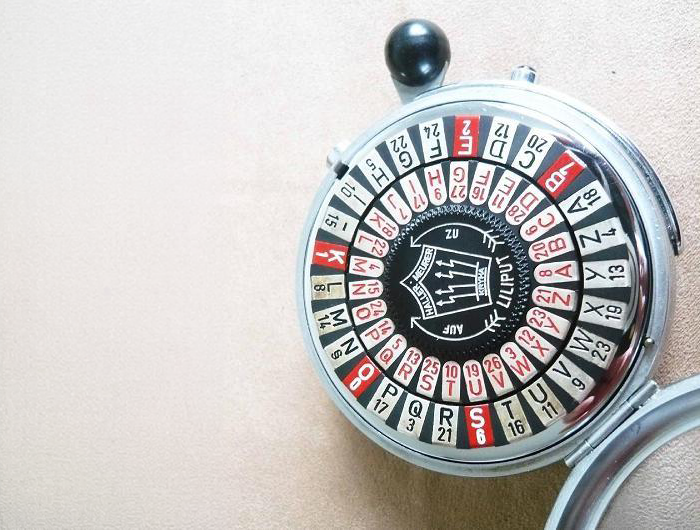
Like the Kryha Standard, the Kryha Liliput did not play a significant role during the Second World War. Nevertheless, it was used on a limited scale by the German intelligence service in South America.
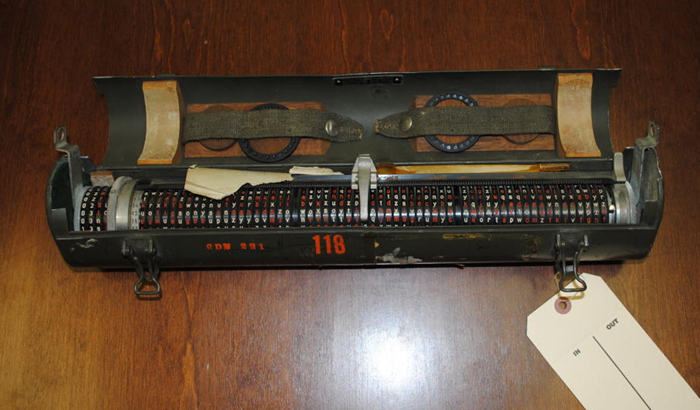
This cipher cylinder was manufactured by Heimsoeth & Rinke, the same company that also produced the Enigma cipher machine. Today, only a single surviving example of this device is known.
Unfortunately, very little information about the cipher cylinder has survived. Its intended purpose, the organization for which it was designed, and the exact method of operation remain unknown. As a result, it continues to be an intriguing and largely unexplained artifact in the history of cryptography.
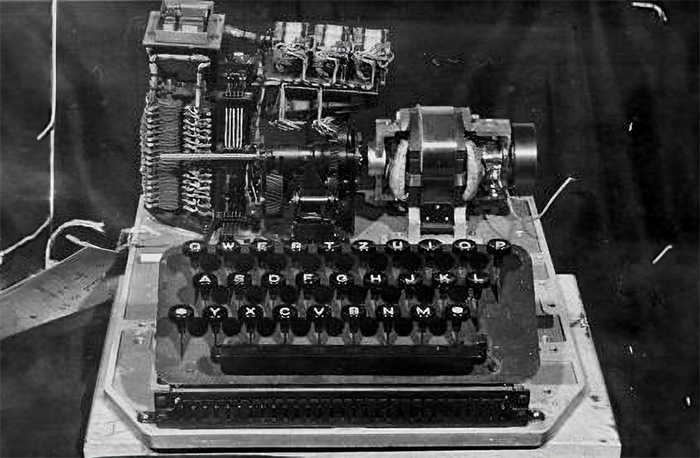
The Schlüsselgerät 39 was an advanced rotor cipher machine developed in Germany during the Second World War as a potential successor to the Enigma. It offered significantly greater cryptographic security than the Enigma through a more sophisticated rotor mechanism and an irregular stepping system.
Source: NSA
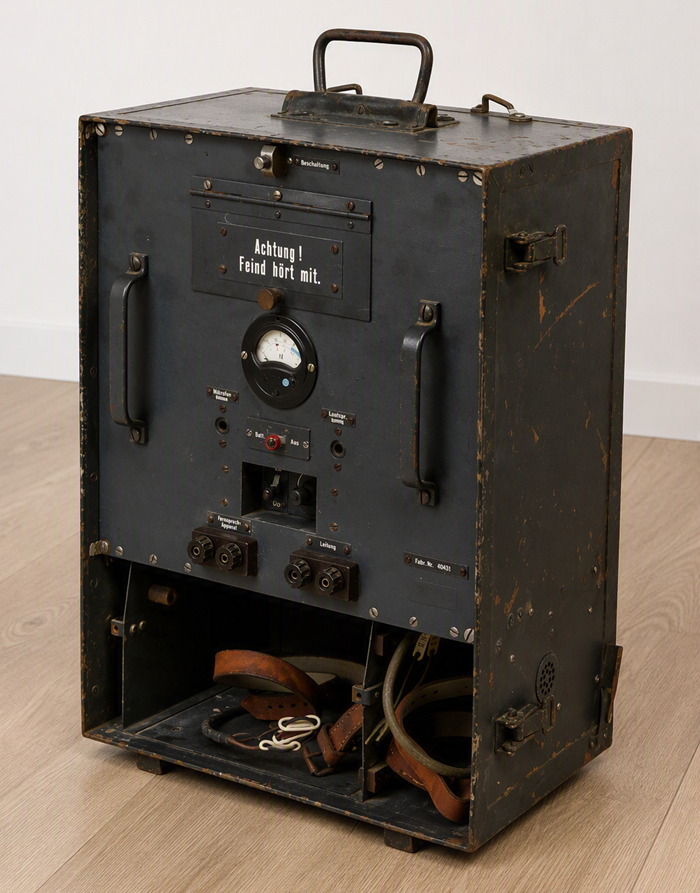
The GK-III b was a portable speech inverter, or voice scrambler, developed by Siemens & Halske around 1942 for use by the German Army during the Second World War. It could be connected to field telephone lines or radio sets. It used a simple frequency-inversion system based on a fixed mirroring frequency of approximately 2,000 Hz. Although it provided protection against casual or unintentional eavesdropping, it offered little security against professional interceptors.
Source: AI-generated
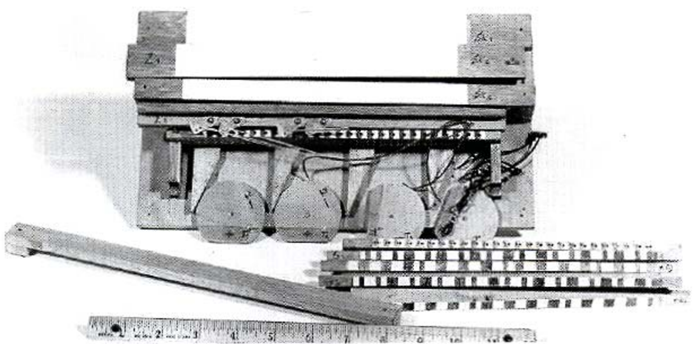
The Schlüsselkasten (“Key Box”) was an encryption device developed by the German cryptologist Fritz Menzer. The device never progressed beyond the prototype stage.
Source: NSA
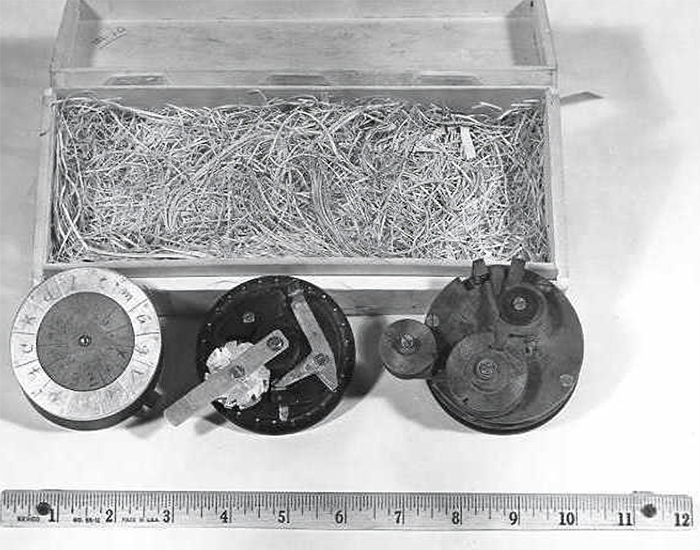
The Menzer plate was a simple cipher machine based on three notched wheels invented by German cryptologist Fritz Menzer. It was meant to be used as a field cipher. The device never advanced beyond the prototype stage.
Source: NSA
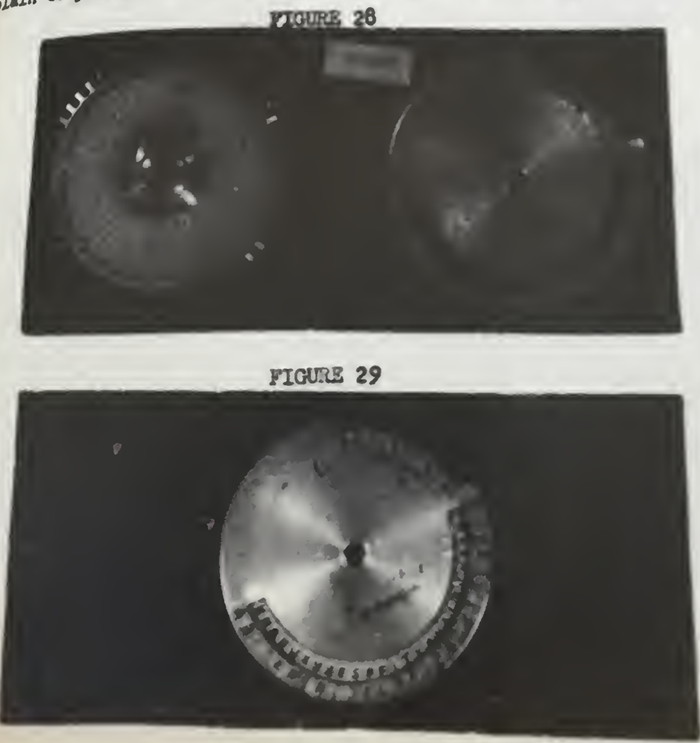
The Schlüsselrad (“Key Wheel”) was another encryption device developed by the German cryptologist Fritz Menzer. The device never advanced beyond the prototype stage. Unfortunately, very little information about this device has survived.
The Schlüsselrad consisted of two rotating discs, forming a simple mechanical encryption tool. The two poor-quality photographs shown here are the only known images of the device currently available.
Source: NSA
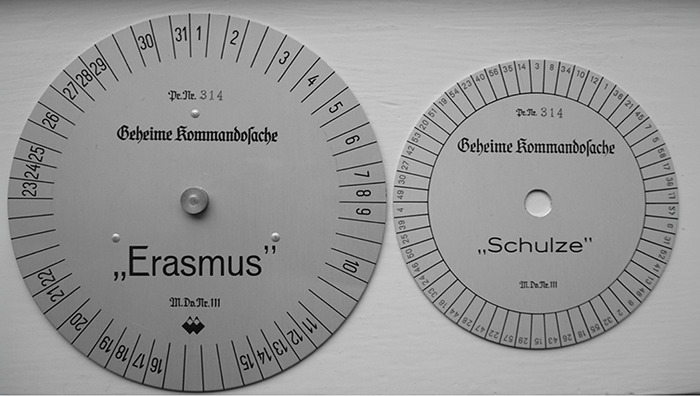
The ES-Scheibe was used for friend-foe detection based on a challenge-response protocol.
Source: Cryptologia
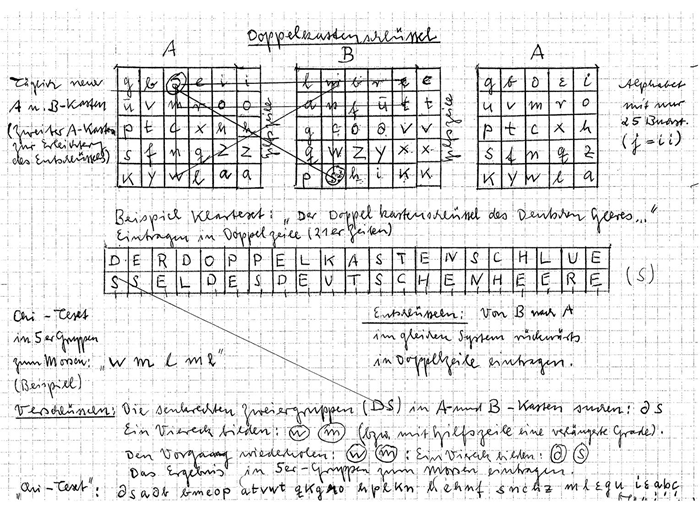
The Doppelkastenschlüssel (“Double Box Cipher”) was the German Army’s most important manual cipher system until 1944. It was based on a variant of the Playfair cipher, adapted to provide greater security.
The Doppelkastenschlüssel was employed wherever an Enigma machine was unavailable – whether because it was too expensive, too bulky to transport, or temporarily out of service.
Source: Jürgen Reinhold
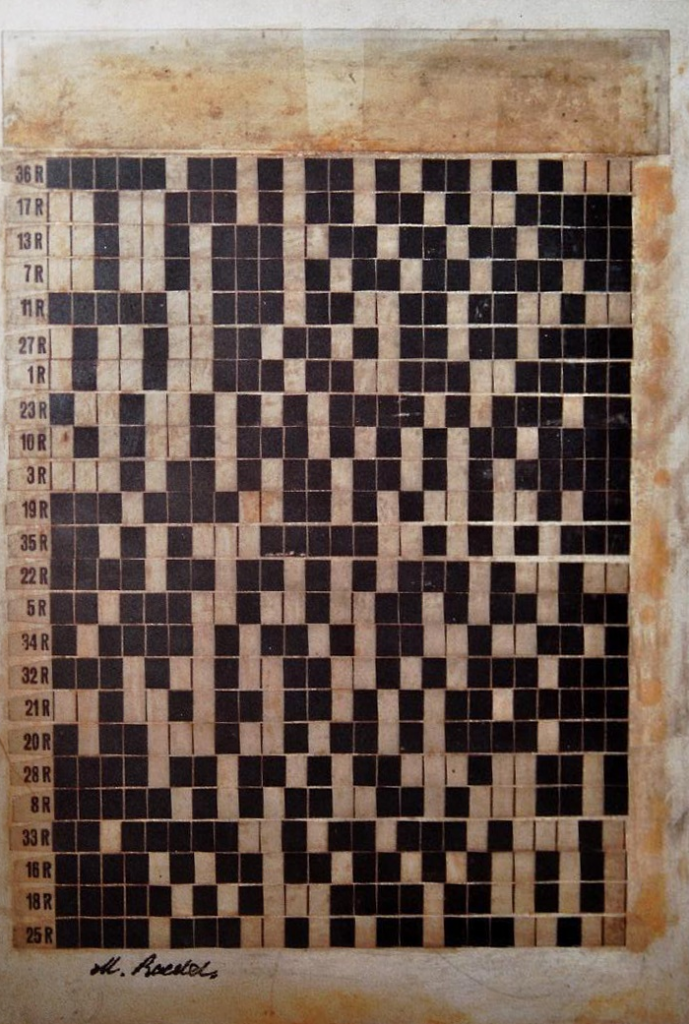
The Rasterschlüssel 44 (RS 44) was a manual encryption system introduced by the German Wehrmacht in March 1944. The RS 44 replaced the earlier Doppelkastenschlüssel, which had become increasingly vulnerable to cryptanalysis.
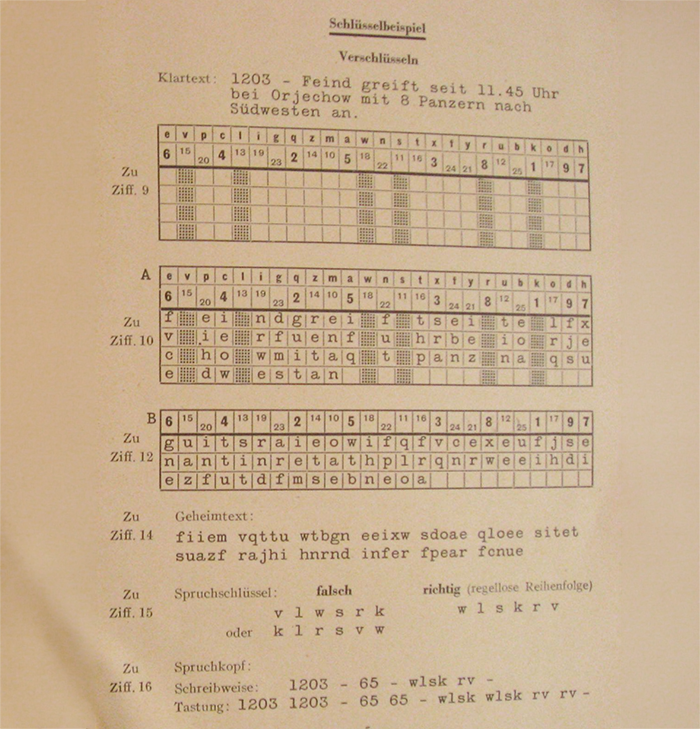
The Rasterersatzverfahren (“grid replacement method”) was used whenever no key sheet for the Rasterschlüssel 44 was available. This situation occurred relatively often, as printing the key sheets – which changed every day – was labor-intensive. During the final months of the Second World War, printing presses and paper were also in short supply.
The Rasterersatzverfahren was essentially a double columnar transposition cipher, known in German as the Doppelwürfel (“double cube”).
Source: Crypto Cellar Research
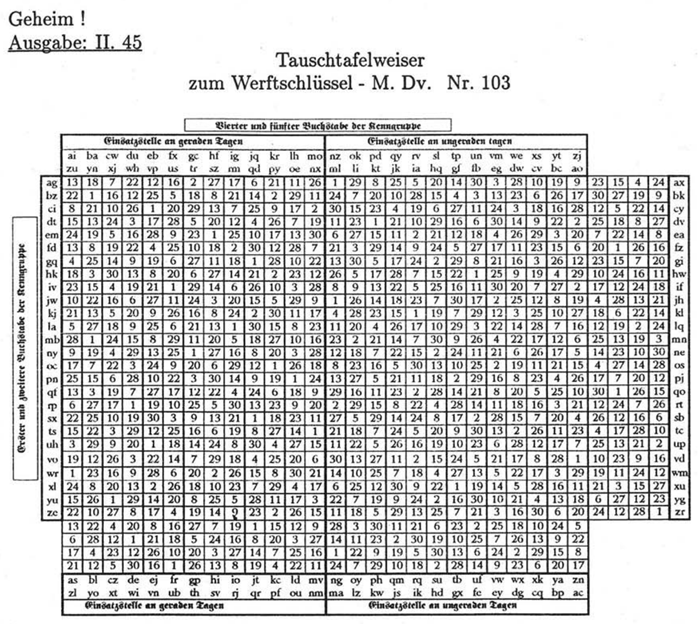
The Werftschlüssel (Dockyard Cipher) was a manual encryption system used by the German Navy.
Source: Cryptologia
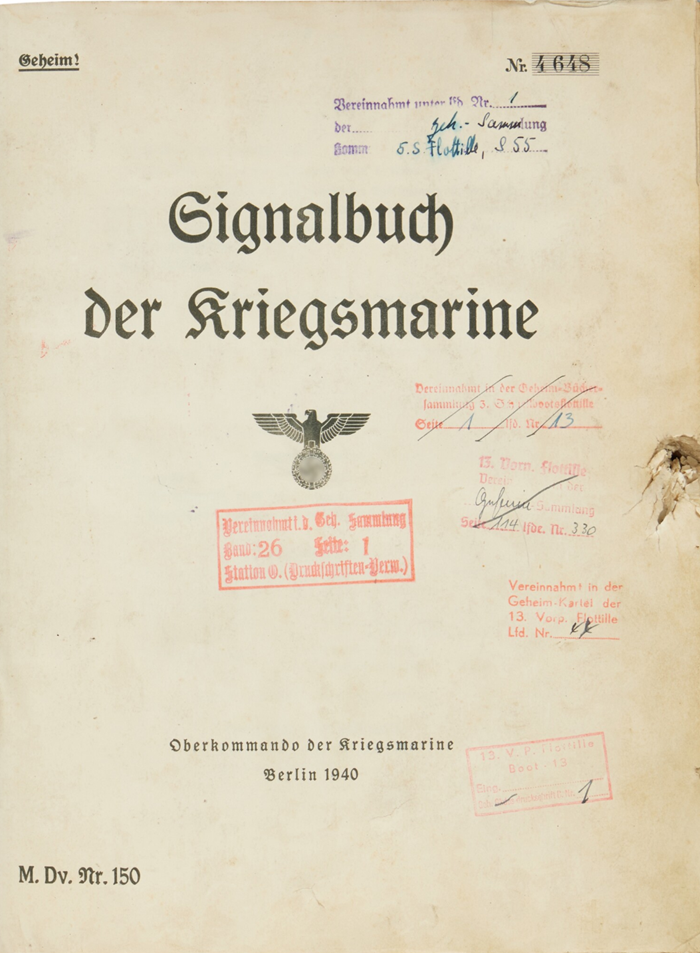
By the Second World War, the golden age of codebooks had largely come to an end. For important communications, cipher machines had replaced them. Nevertheless, a number of codebooks remained in use for less critical messages. One of these was the Signalbuch der Kriegsmarine (German Navy Signal Book).
Source: Sotheby’s
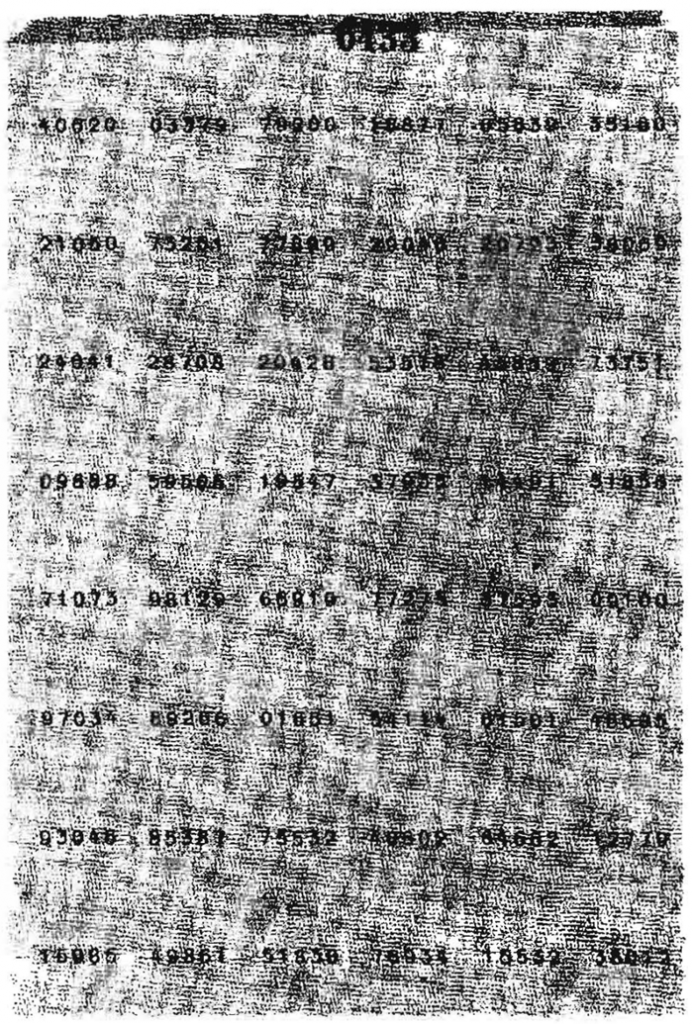
The Floradora Cipher consisted of a codebook that converted words and individual letters into numerical groups. These numbers were then enciphered, in some cases by adding numerical values provided on perforated paper strips (see illustration).
The Floradora system was successfully broken by British cryptanalysts, enabling them to read encrypted communications that relied on this method.
Source: Cryptologia
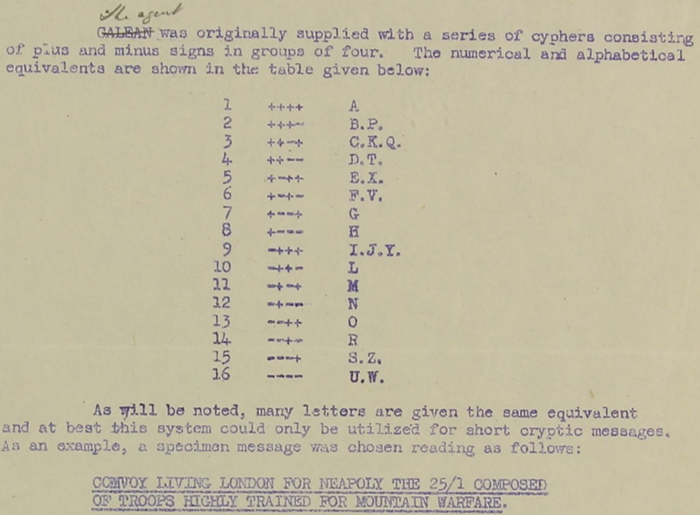
This steganographic code used by a German spy encodes the alphabet using four-bit patterns consisting of + and − symbols. Since four-bit patterns provide only sixteen distinct combinations, some letters are not distinguished from one another (for example, I, J, and Y). The code was used by leaving either short (−) or long (+) spaces between the words of an otherwise ordinary text.
Source: British National Archive KV-2-2424
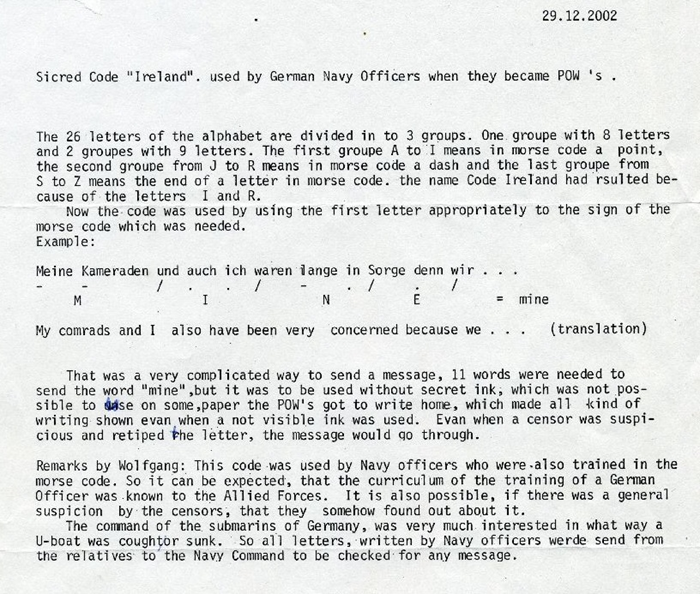
The “Ireland” code was designed for German naval officers in case they were taken prisoner. This steganographic system was named “Ireland” not after the country, but because the letters I and R play a key role in it. The concept is quite simple: each letter of the alphabet represents either a dot, a dash, or a blank. The letters A–I represent a dot, J–Q a dash, and R–Z a blank. By choosing words whose initial letters followed this mapping, a prisoner of war could conceal a secret Morse code message within an otherwise innocent-looking letter.
Source: Richard Brisson
Literature
Back to Crypto Galleries