Most readers are probably familiar with the term steganography. This field deals with the art and science of concealing information in such a way that the very existence of the communication remains hidden.
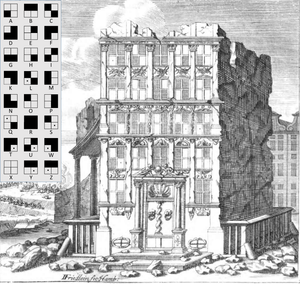
Steganography is thousands of years old and almost certainly predates cryptography. I have written a book about the history of steganography (in German): Versteckte Botschaften (Hidden Messages, 2017).

Digital steganography
Digital steganography emerged in the late 1990s. Its purpose is to hide messages within digital information. At the time, there was considerable discussion about whether digital steganography could be used to circumvent proposed restrictions on encryption. Rumors even circulated that Muslim terrorists were using this technology to communicate without attracting attention.
One particular branch of digital steganography is digital watermarking: the practice of embedding hidden information in images, videos, or audio files, for example to identify copyright ownership. This, too, was a hot topic back then.
Several software companies offered solutions for steganographic communication and digital watermarking. Playboy magazine, for instance, considered marking its images using this technology.
In the end, however, not much came of it. Digital steganography never really caught on, and neither did digital watermarking. Over the past two decades, there has been very little talk about either subject.
But things are starting to move again in the world of digital steganography. And, unsurprisingly, artificial intelligence is behind this renewed interest. One reason is that digital watermarking in AI-generated content has become a hot topic:
- OpenAI: In October 2026, the company introduced a method called “textGrain” for ChatGPT and Codex texts in the EU. It statistically influences the choice of words in a text. According to press reports, its detection rate is around 80% for texts of at least 200 tokens and approximately 95% for texts of at least 400 tokens. Shorter texts are more difficult to analyze.
- Anthropic: Since August 2026, the company has been incorporating invisible watermarks into texts generated by its Claude chatbot. These are reportedly designed to survive copying and pasting.
- Google: Uses its SynthID technology.
Unfortunately, none of these providers reveals exactly how their systems work. However, I suspect that the companies have studied the research papers and publications from the 1990s and 2000s very carefully and built upon the ideas presented there.
AI invents new
Blog reader John Haas recently brought another interesting development to my attention. I’m not referring to his recently completed Bliss Translator, although that is certainly worth looking at, too. Instead, I mean the following: Researchers have used AI to develop steganographic methods that can be applied to images. The results were quite impressive, and the techniques the AI came up with closely resemble methods that humans have independently devised.
The following image is a fairly simple example:
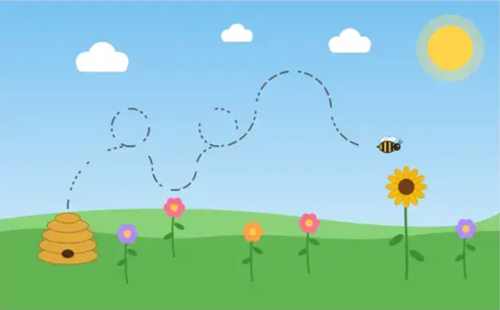 Source: Kezin/Chan
As you can easily see, the image contains a message encoded in Morse code. It reads: “THE VAULT CODE IS 48213”.
The AI also developed less obvious encoding schemes. Overall, the results are remarkably similar to the examples I describe in my book.
The researchers also tested whether other AI systems could detect the hidden messages without being given any information about the methods used to conceal them. This worked surprisingly well, too. Perhaps AI systems will soon be able to uncover hidden messages in all sorts of objects where nobody would ever suspect their existence. As readers of my book will know, there are numerous historical texts in which authors used steganographic techniques to preserve their names or other information for posterity. AI seems almost tailor-made to discover such messages.
This experiment is not yet a reason to panic. Nevertheless, the thought of AI systems communicating with one another without humans even noticing is somewhat unsettling.
Regardless, I’m delighted to see AI giving steganography a new lease on life and bringing fresh momentum to a field that has been largely forgotten for decades.
Back to Cipherbrain Blog