Musical Ciphers
The idea of encrypting text by means of musical notation is centuries old. Over the years, many different concepts for such musical ciphers have been developed. Yet only a very small number of them were ever put into practical use. This gallery presents a selection of historical examples and approaches.
Special thanks to Satoshi Tomokiyo for several valuable suggestions and insights related to this gallery.
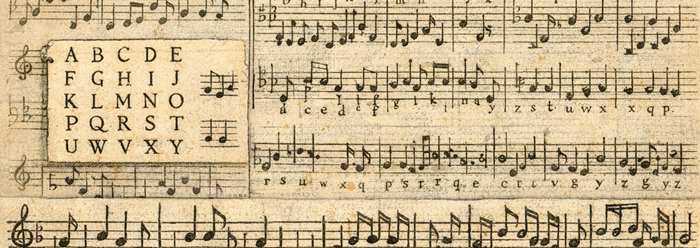
1277
This musical cipher was described by Martinus Polonus. It is mentioned in the book The Ciphers of the Monks (2001) by David A. King, p. 114.

1436
This musicals cipher is depicted in the Sermon Booklets of Friar Nicholas Philip.

Late 15th century
A cipher from BL Sloane 351 described in the book The Ciphers of the Monks (2001) by David A. King, p. 177.
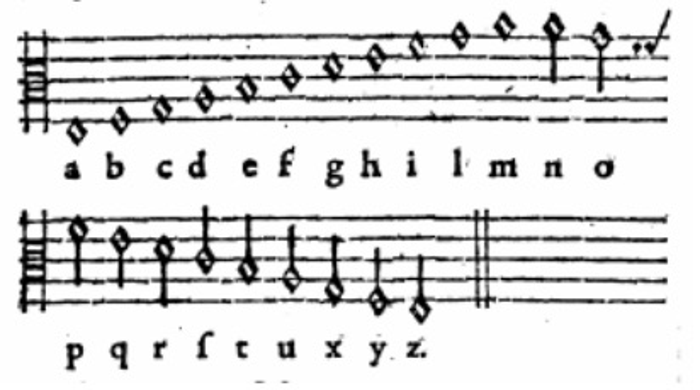
1602
The book De furtivis literarum notis by Giambattista della Porta (1535-1615) is regarded as the most important work on cryptography of the Renaissance. This simple musical cipher originates from that remarkable publication.

1622
This musical cipher was proposed in the 17th century by the polymath Daniel Schwenter (1585-1636).
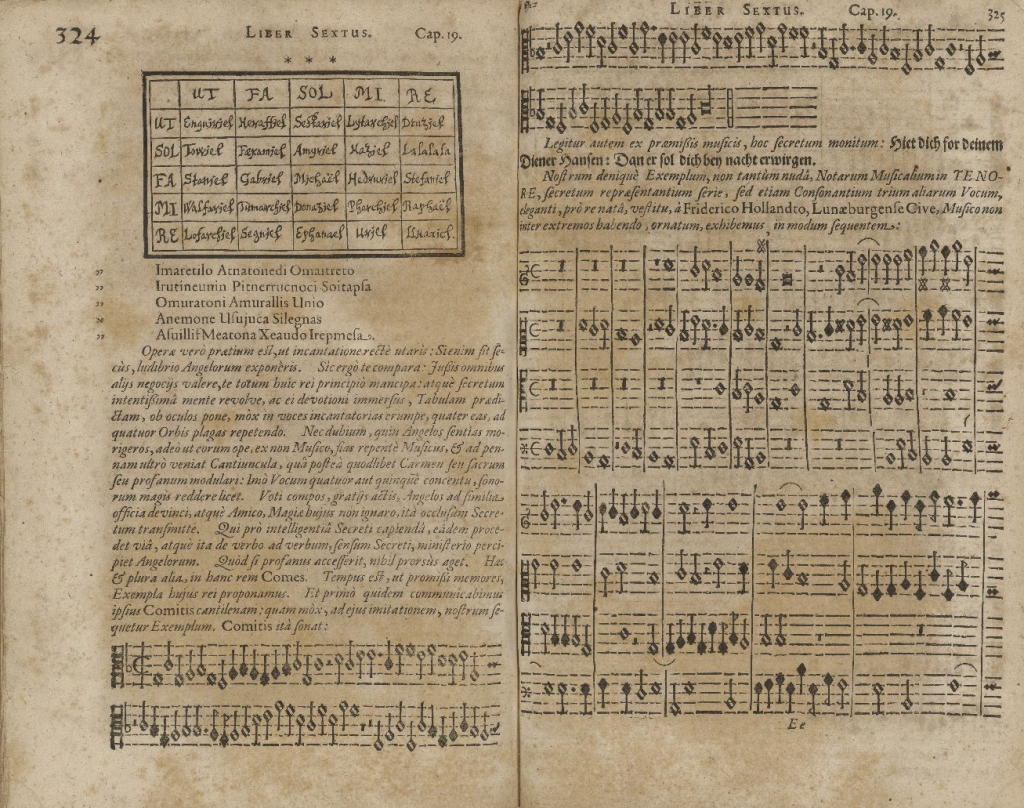
1624
Augustus II, Duke of Brunswick (1579-1666) had an interest in cryptography. Under the pseudonym Gustavus Selenus, he wrote a book about this tpoic, Cryptomenytices et Cryptographiae libri IX. This musical cipher originates from that publication.
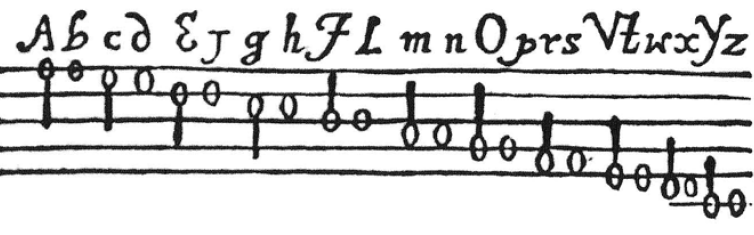
1641
The priest and cryptologist John Wilkins (1614-1672) developed this musical cipher in the 17th century. It is printed in his book, Mercury, or the Secret and Swift Messenger.

1665
A musical cipher from Gaspar Schott’s book Schola steganographica.
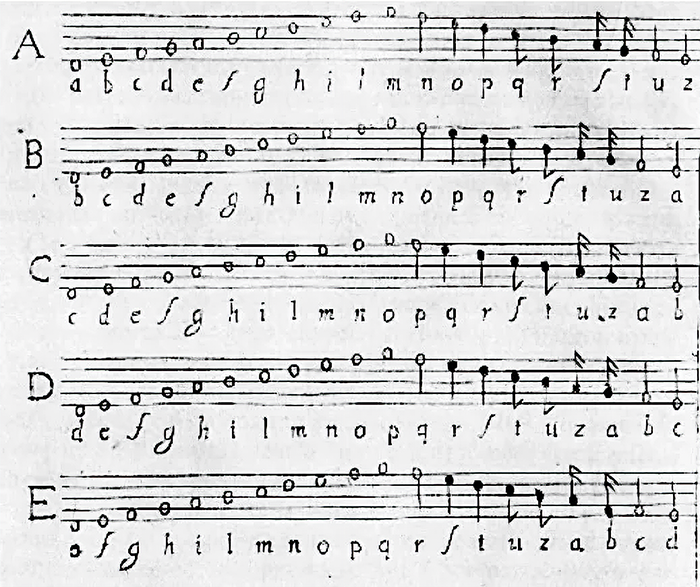
1670
A musical cipher from Francisco Lana de Terzi’s book Prodromo, ouero, Saggio di alcune inuentione nuoue, premesso all’arte maestra.
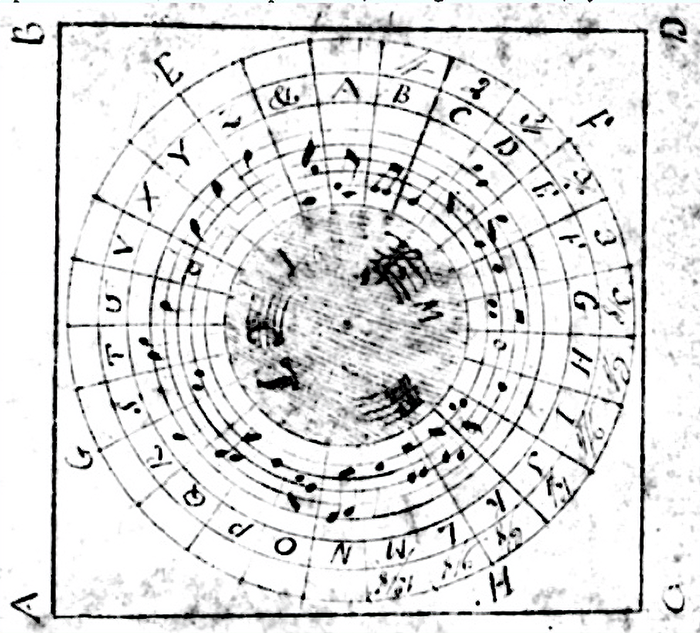
1750
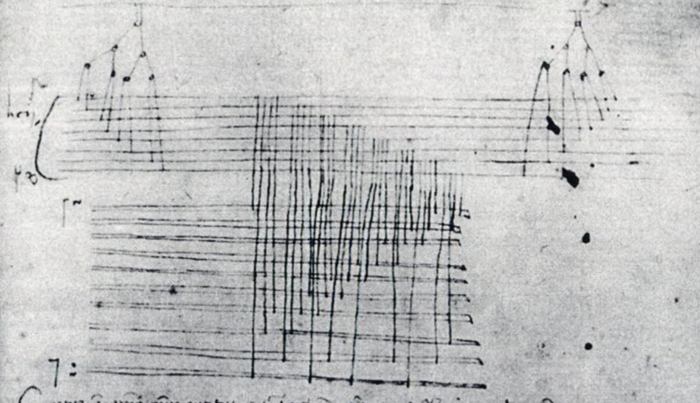
Musical cipher disc from an anonymous 18th-century manuscript, Port-Lesney, France
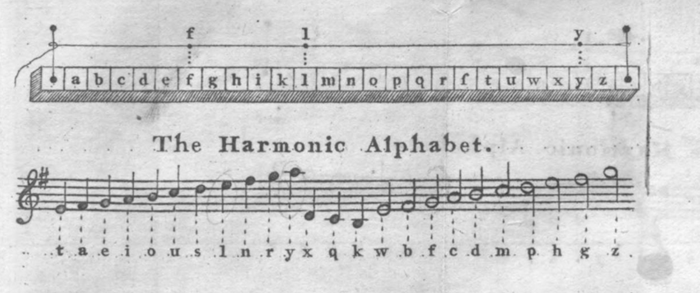
1772
This cipher is taken from the book A Treatise on the Art of Deciphering, and of Writing in Cipher by Philip Thicknesse.
1793
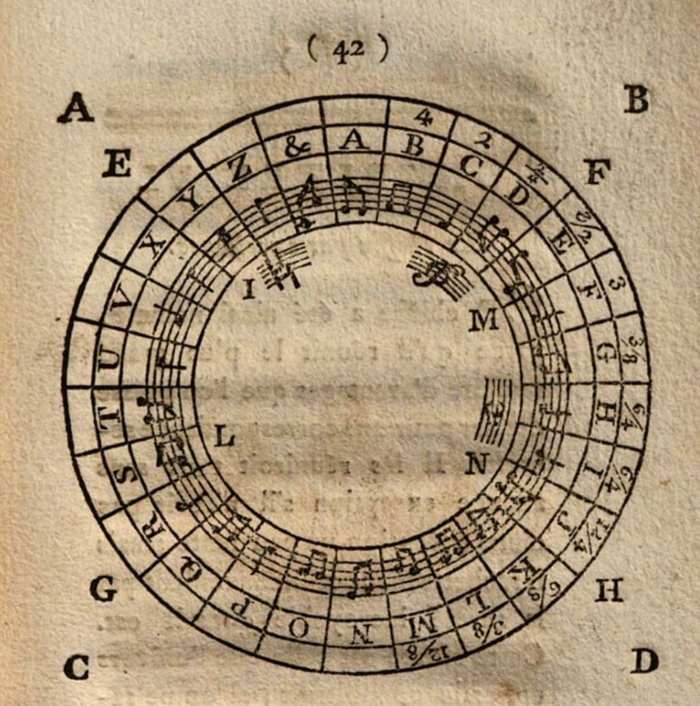
A musical cipher from the French book Le contr’espion, ou les clefs de toutes les correspondances secrètes, written by an anonymous author under the pen name “Dlandol.”
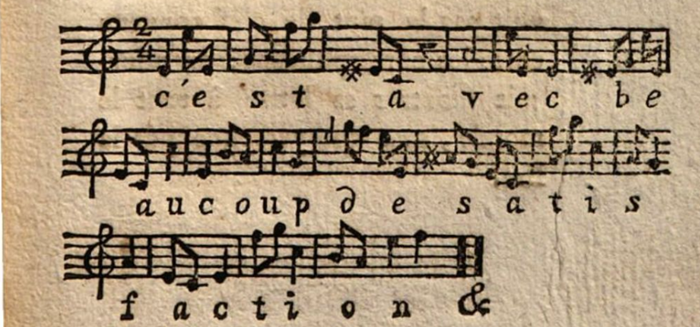
This musical piece encodes the message “c’est avec beaucoup de satisfaction” with Dlandol’s method.

1804
This cipher by Johann Bücking generates musical compositions in the form of a minuet in the key of G. It is described in the 1804 book, Anweisung zur geheimen Correpondenz.
1807
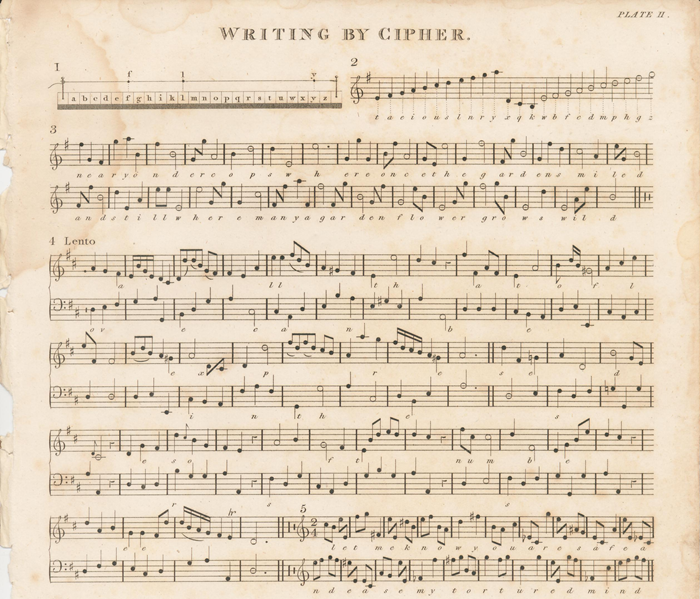
This cipher is taken from the book Rees Cyclopedia by William Blair.
Source: Tobias Schrödel

1808
This musical cipher was developed by the composer Michael Haydn.

1875
This advertisement, published in the French newspaper Le Figaro on February 28, 1875, contains the terms do, re, mi, and fa. These correspond to the musical notes C, D, E, and F, and could represent the beginning of a melody in C major. Its meaning, however, remains unknown.
Source: Didier Müller
1906
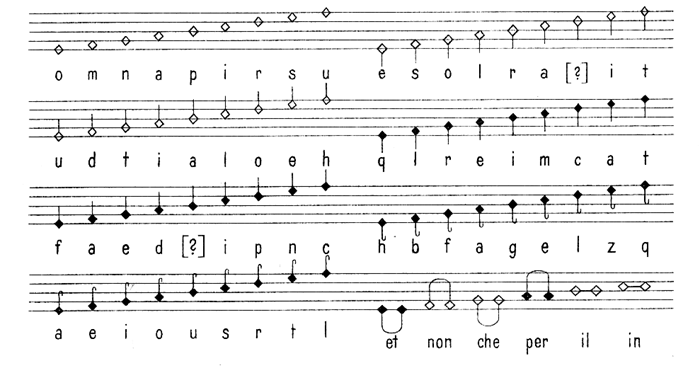
This musical cipher is described in the book Die Geheimschrift im Dienste der päpstichen Kurie by Aloys Meister.

1933
William F. Friedman and Elizebeth Smith Friedman are among the most important codebreakers in history. This Christmas card they designed features a musical cryptogram, with the key provided in the lower right corner.
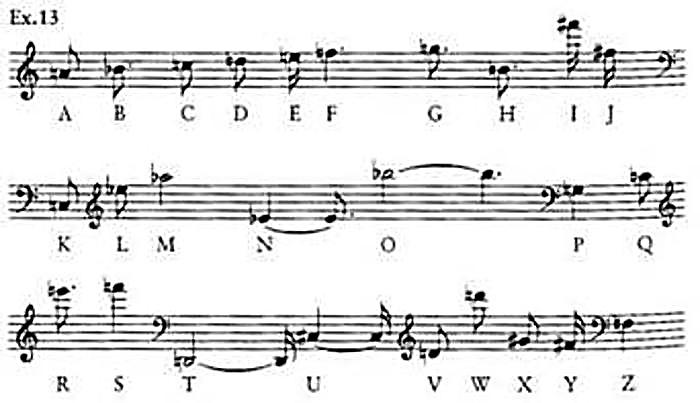
1969
From the composition Méditations sur le Mystère de la Sainte Trinité by Olivier Messiaen.
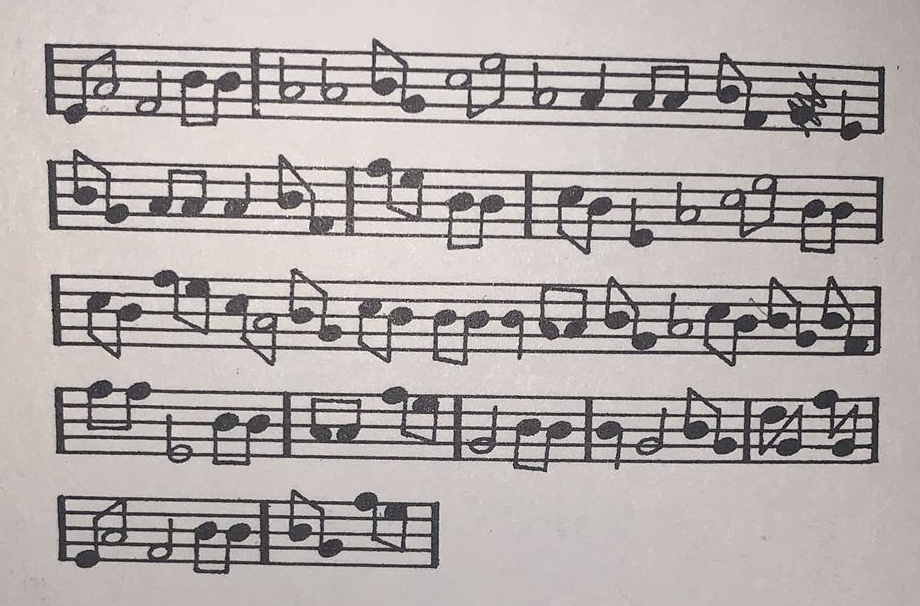
1972
This musical cryptogram originates from the book A Captain from Portugal by the artist Guy de Cointet (1934–1983).
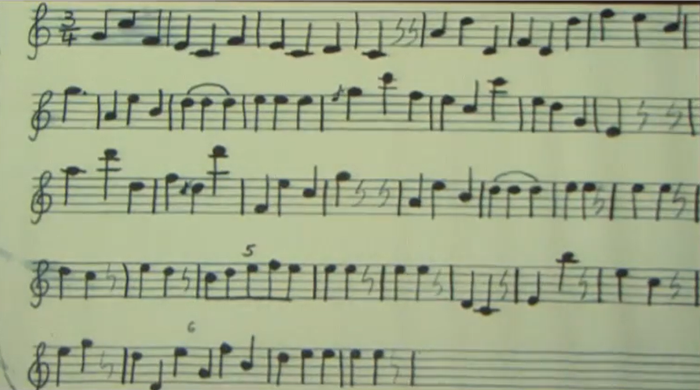
2011
This musical message was presented at a Science Slam by the student Christiane Licht. The plaintext is “SCIENCE SLAM IN MÜNSTER GOLDENES GEHIRN”.
Source: Christiane Licht
Literature
Back to Crypto Galleries