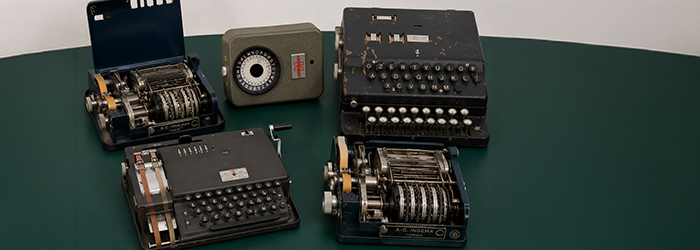
Boris Hagelin’s encryption machines
Boris Hagelin (1892–1983) was a Swedish engineer, inventor, and businessman who became the most successful figure in the history of mechanical cryptography. Born in the Russian Empire, he joined the Swedish company A.B. Cryptograph in the 1920s and soon began developing his own cipher machines. In 1952, Hagelin founded Crypto AG in Switzerland, establishing a company that would become the world’s leading manufacturer of encryption equipment.
Hagelin died in Switzerland in 1983 at the age of 91. Decades later, his legacy became the subject of renewed scrutiny following revelations about the secret ownership and manipulation of Crypto AG by the CIA and the BND.
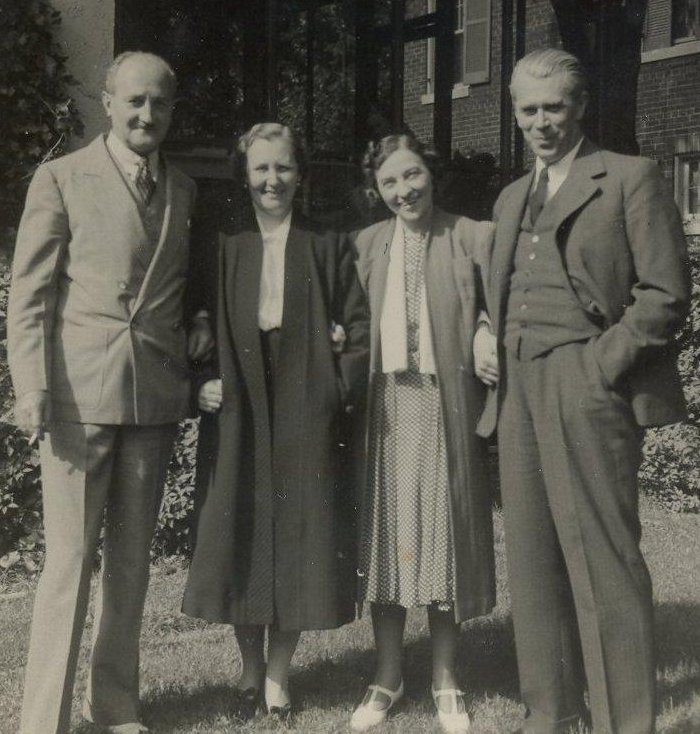
This photo shows William Friedman, Anne Hagelin, Elizebeth Friedman, and Boris Hagelin. Hagelin is one of the few entrepreneurs who made their fortune with encryption machines.
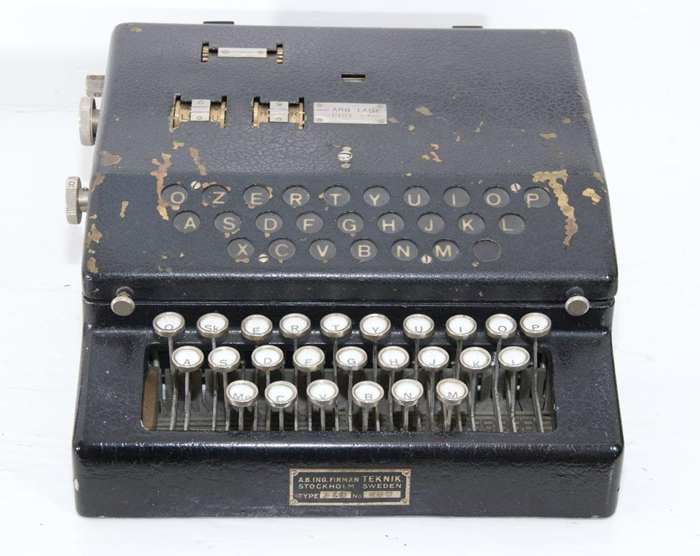
The B-21 (here at the Museum Corver) was developed in 1925. It was the first successful cipher machine produced by Hagelin. It is a portable mechanical device that encrypts messages using wired rotors.
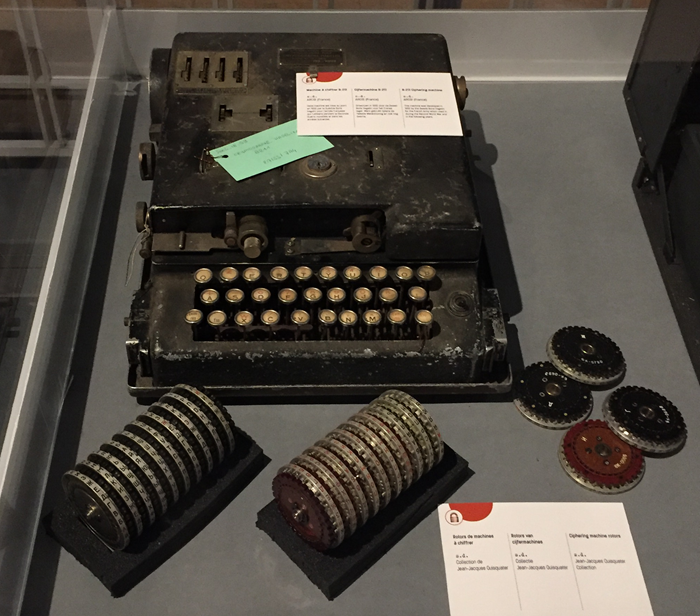
The B-211 (here at the Mundaneum in Mons, Belgium) was an electromechanical cipher machine developed by Boris Hagelin around 1932 as an improved version of the B-21. Unlike the B-21, it printed encrypted and decrypted messages directly onto a paper strip instead of using a lamp display.
The B-211 was adopted by the French Army.
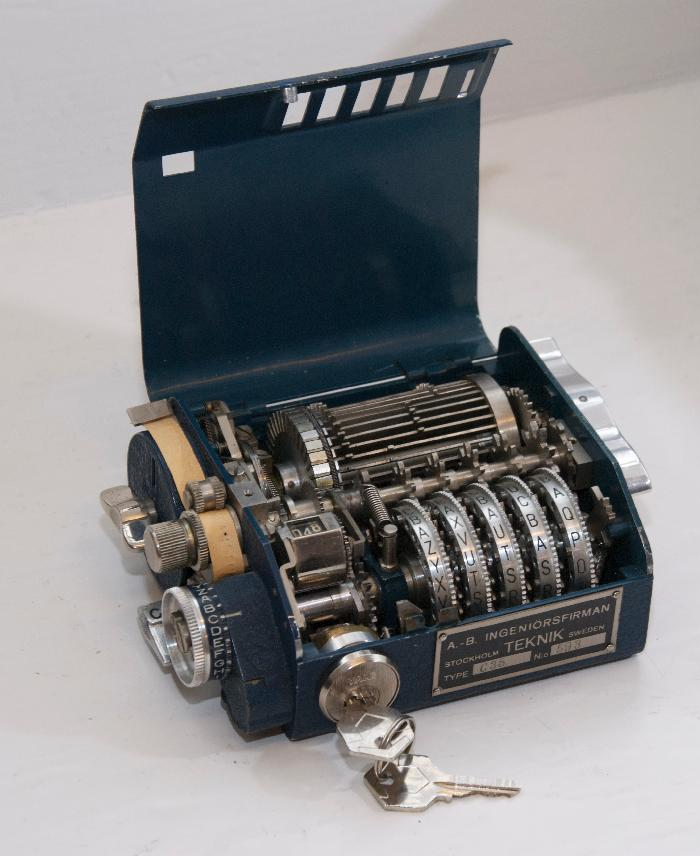
The C-35 (this specimen was shown at the Enigma Reunion 2009 in Bletchley Park) was the first pin-and-lug cipher machine, introduced in 1935. It was a fully mechanical device that printed encrypted messages on a paper strip.
The C-35 became the foundation for later models such as the C-36 and the famous M-209, which was widely used during World War II.

The C-36 (here at the Deutsches Museum in Munich) was an improved version of the C-35, developed in the late 1930s. It used five configurable pinwheels and a pin-and-lug mechanism to encrypt messages.
The C-36 became the basis for the C-38 and the famous M-209, which was widely used by the U.S. Army during World War II.
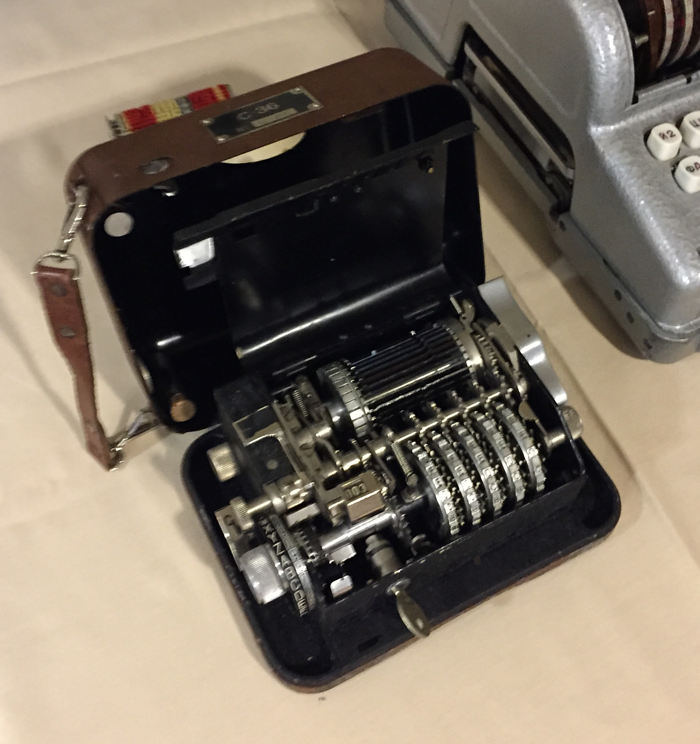
The Hagelin C-38 (shown here at the Charlotte Crypto Symposium) was an improved version of the C-36, featuring six pinwheels for greater security and a much larger key space. It became the basis for the U.S. M-209 cipher machine used extensively during World War II.
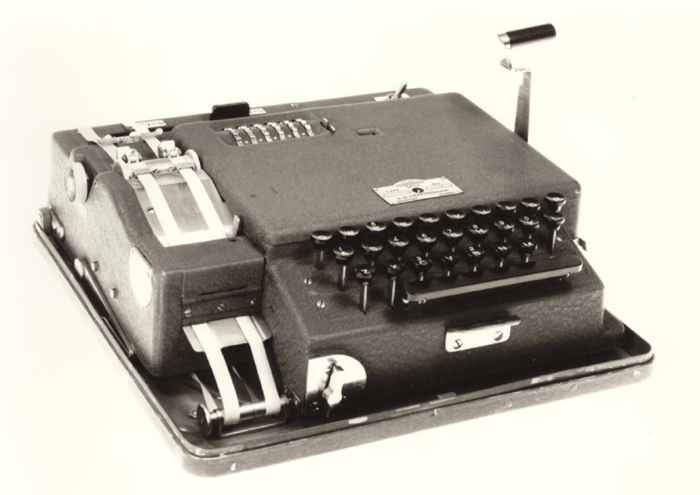
The BC-543 was an advanced portable cipher machine developed by Hagelin as a successor to the C-series. It featured six interchangeable pinwheels and a refined key-generation mechanism, providing a high level of cryptographic security while remaining compact and easy to operate.
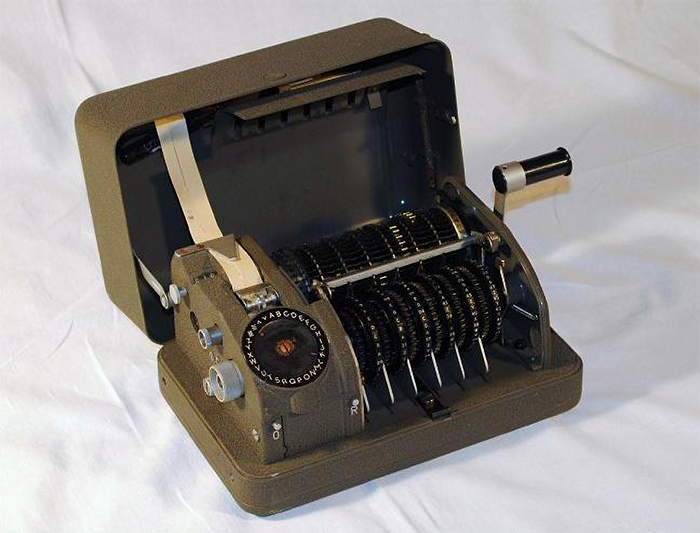
The C-52 was a mechanical cipher machine introduced in 1952 by Crypto AG as the successor to the C-38. It used six selectable pinwheels and an improved pin-and-lug mechanism to provide much stronger encryption. A cryptographically more advanced version was named CX-52.
The C(X)-52 became one of the most widely used mechanical cipher machines of the Cold War and was exported to more than 60 countries.
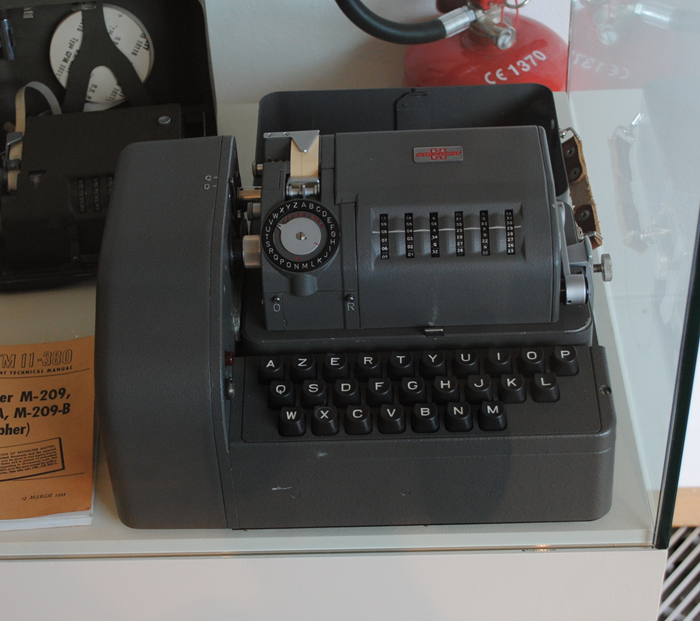
The C-52 with a keyboard, shown at the Schreibmaschinenmuseum in Partschins, Italy
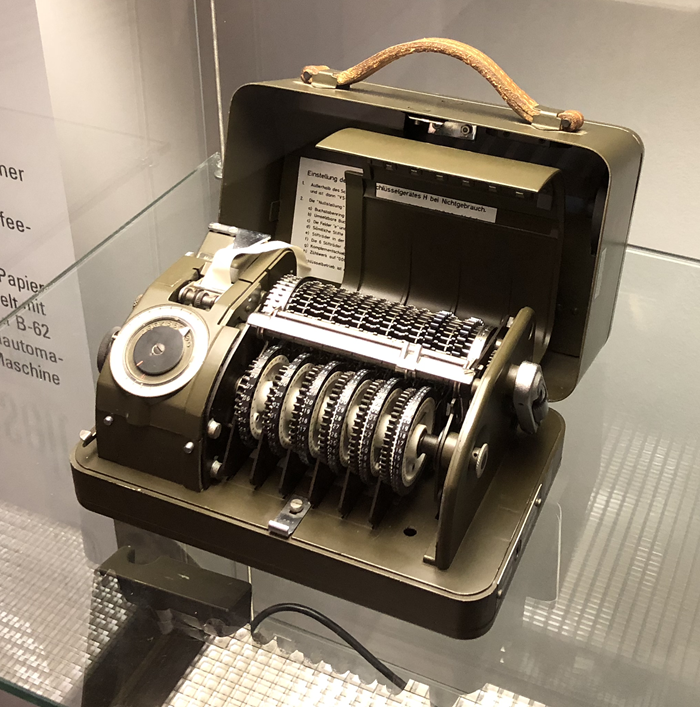
The Hell H-54 (here at the Deutsches Schloss- und Beschlägemuseum in Velbert) was a licensed German version of the Hagelin C-52, introduced in 1954 by the Hell company for the German Bundeswehr. It featured several improvements in usability and reliability over the original design.
The machine used a mechanical pin-and-lug encryption system with six interchangeable pinwheels, providing secure communication without electronic components.
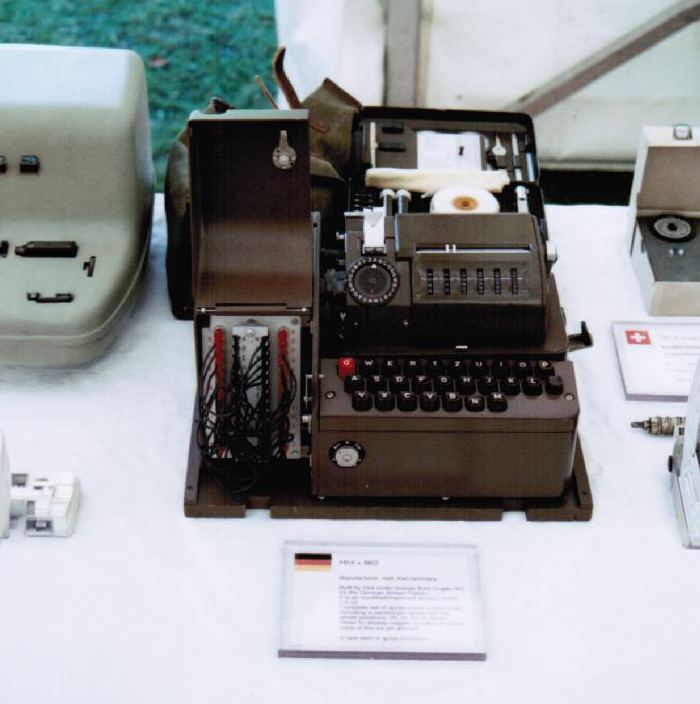
The Hell H-54 (here at the Enigma Reunion) with a keyboard.
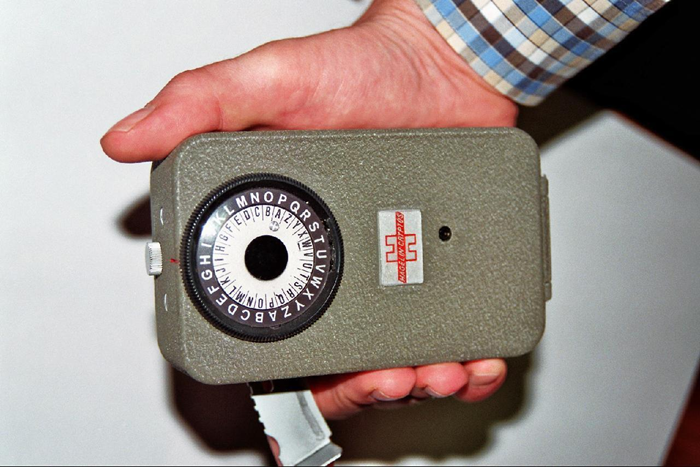
The Hagelin CD-57 (this specimen is from the collection of Günter Hütter) was a compact, hand-held mechanical cipher machine introduced in 1957 by Crypto AG. It was designed as a portable companion to the CX-52 and used six pinwheels with an advanced pin-and-lug mechanism. A similar device with a simpler encryption mechanism is called the CD 55.
The CD-57 was widely used by NATO and other military and intelligence organizations during the Cold War, while a licensed version served with the German Bundeswehr as the STG-61.
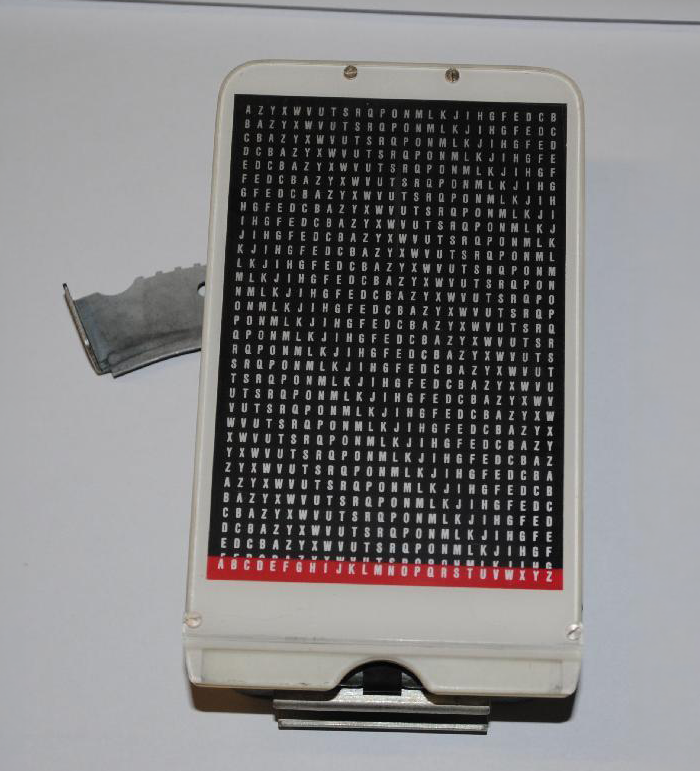
CDS-78 is a variant of the CD-57. This specimen belongs to the Bundesamt für Sicherheit in der Informationstechnik (BSI).
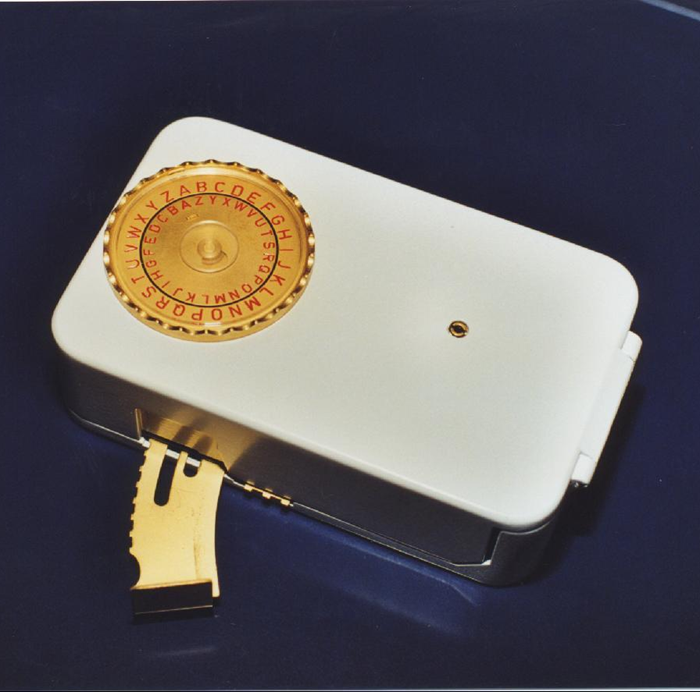
This limited edition of the CD-55 was known as CD-55/LUX. It was supplied to the Vatican and other special customers.
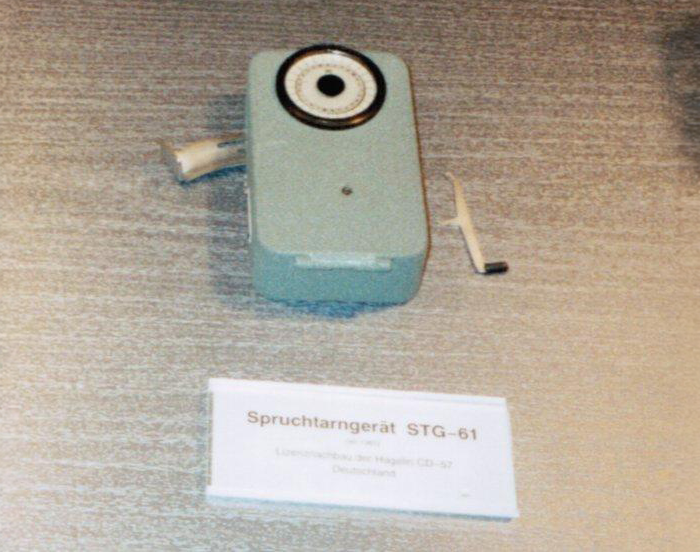
The Kiel-based company Hell manufactured the CD-57 under license, marketing it as the STG-61.
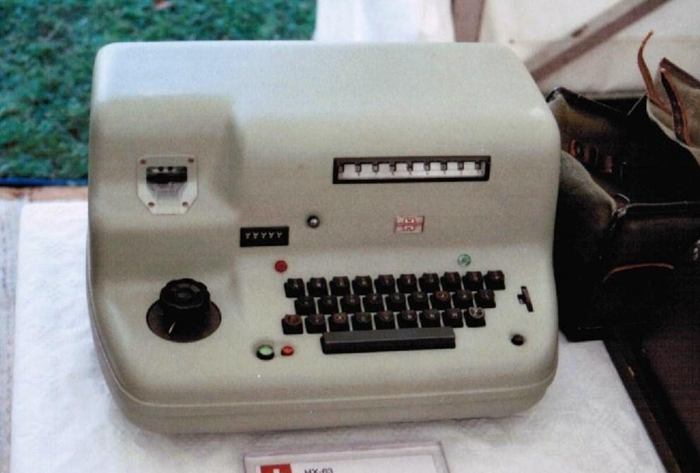
The HX-63 (here at the Enigma Reunion 2009 in Bletchley Park) was an advanced electromechanical rotor cipher machine introduced by Crypto AG in 1963. It used nine rotors with 41 contacts each, making it one of the most sophisticated rotor machines ever built.
Its innovative re-entry (reinjection) design, irregular rotor stepping, and dual plugboard created an enormous key space of about 10^600 possible settings, far exceeding earlier rotor machines such as the Enigma.
Only a small number of HX-63 machines were produced, mainly for a French government agency, before electronic cipher machines replaced rotor technology in the late 1960s.
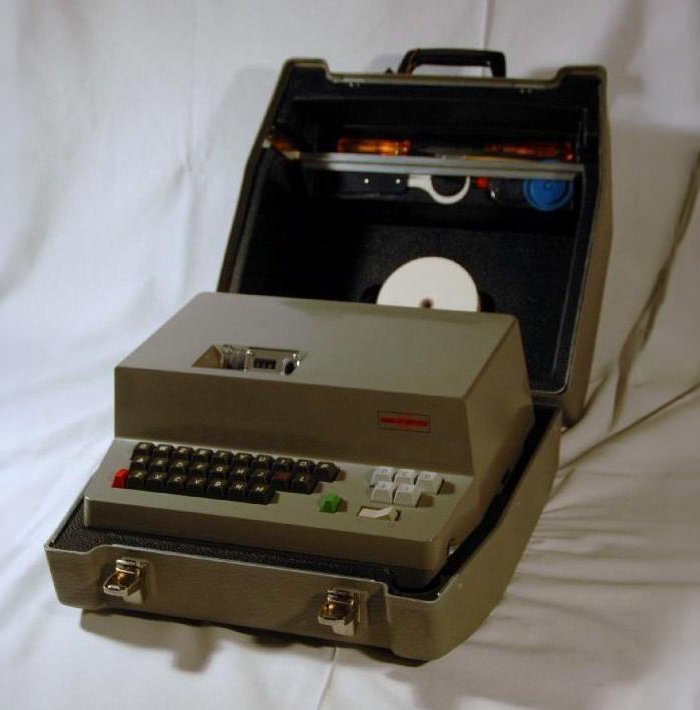
The H-460 was Crypto AG’s first electronic cipher machine, introduced in 1970. It replaced the company’s traditional pinwheel-based mechanical designs with shift-register technology, marking the transition to electronic cryptography.
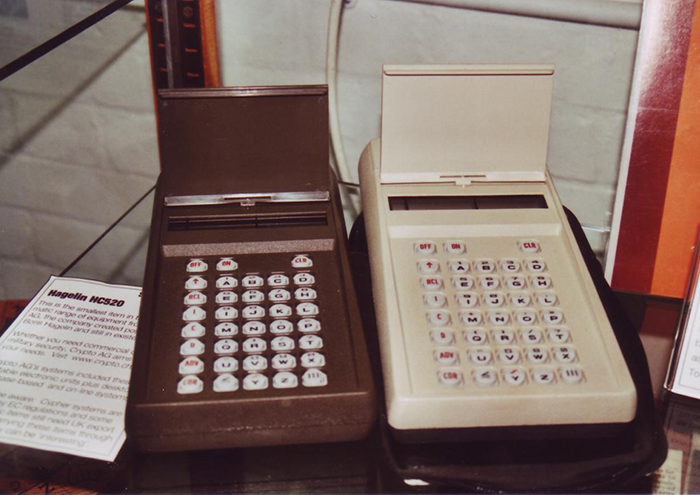
The HC-520 (here at the Enigma Reunion 2009 in Bletchley Park) was Crypto AG’s first pocket-sized fully electronic cipher machine, introduced in 1977. It featured a keyboard, LCD display, and rechargeable battery, allowing users to encrypt and decrypt messages without any mechanical components. Designed as an electronic successor to the CD-57, it offered greater cryptographic strength while remaining compact and portable.
Literature
Back to Crypto Galleries