Cipher Cylinders
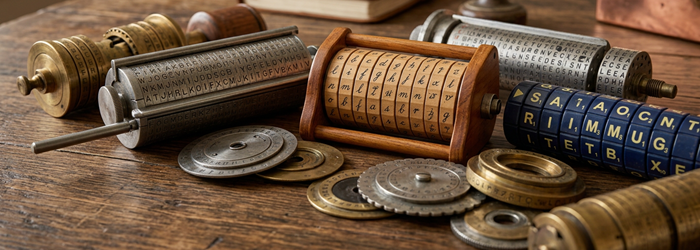
Cipher cylinders are among the oldest encryption devices. However, they did not see widespread use until the 1920s, when they were adopted for military communication in the U.S. They were soon replaced by more advanced encryption machines.

This device was described by Giovanni Fontana in his book Tractatus de instrumentis artis memorie (1430). It was not originally intended for encryption, but rather as a memory aid. At a time when paper and ink were still expensive, a device of this kind offered a practical way to record notes.
However, the apparatus can also be used as a cipher cylinder for enciphering messages. Horst Kranz and Walter Oberschelp, who wrote a book about Fontana’s memory devices, consider it plausible that Fontana was aware of the device’s potential for encryption.
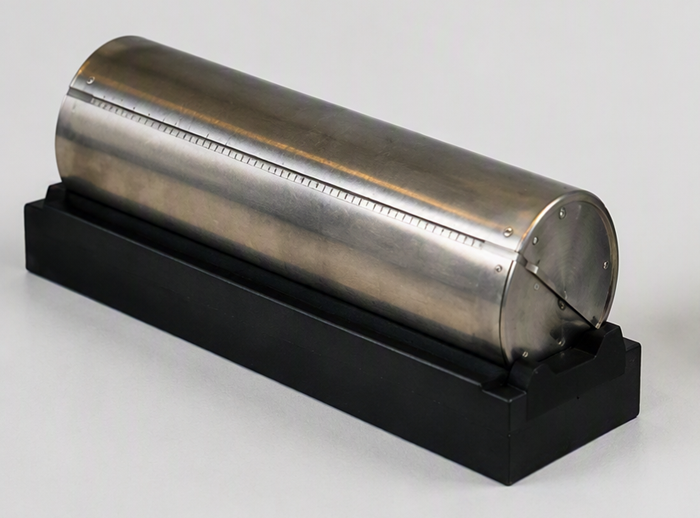
In the 18th century, Swedish inventor and engineer Fredrik Gripenstierna introduced this cipher cylinder.
Source: AI-generated
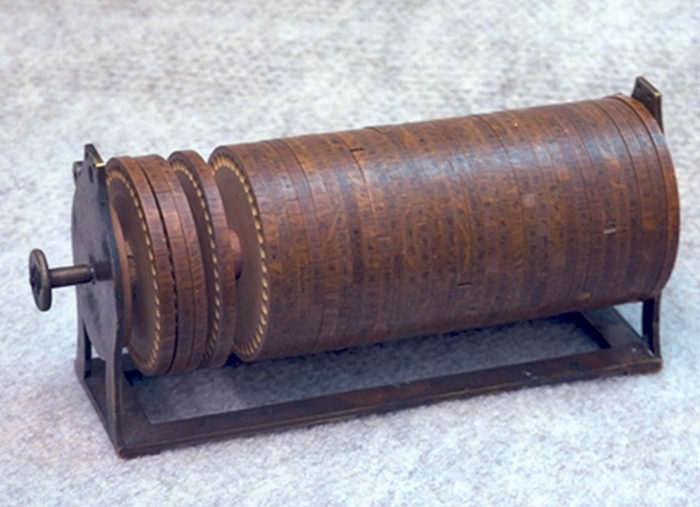
In 1790, future U.S. President Thomas Jefferson invented a cipher cylinder, an encryption device that was soon forgotten. This particular example was created several decades later and is believed to be based on Jefferson’s original concept. Unfortunately, little else is known about the device today.
Source: National Cryptologic Museum
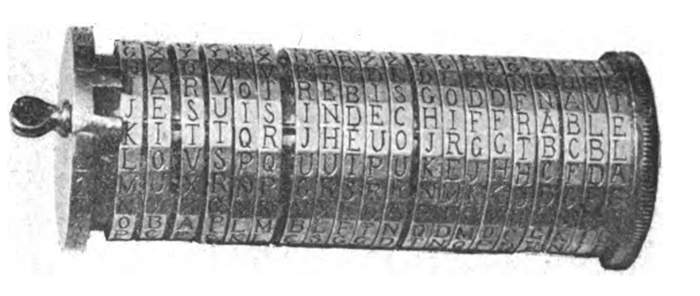
In the late nineteenth century, several cryptologists turned their attention to the cipher cylinder. This particular version comes from the 1901 book Les chiffres secrets dévoilés by Étienne Bazeries.

The Durcos Scotograph is a cipher cylinder with a few additional parts.
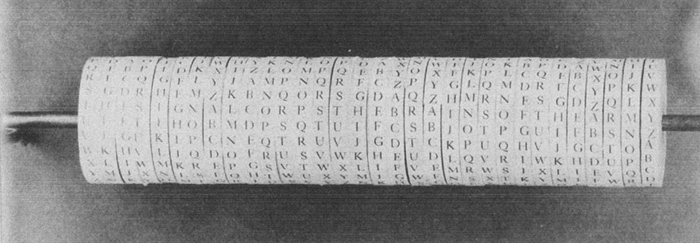
James G. Taylor’s cylinder device, dating from October 1911. It was developed as a prototype for the U.S. Army and later became a predecessor of the M-94.
Source: National Cryptologic Museum

Another prototype made for the U.S. Army. It was developed by Parker Hitt in 1912 and became another predecessor of the M-94.
Source: National Cryptologic Museum
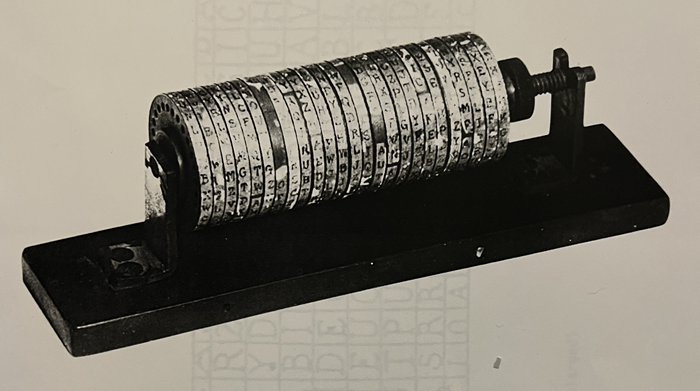
Another design for the U.S. Army. It was developed by Joseph O. Mauborgne in 1917 and became another predecessor of the M-94.
Source: National Cryptologic Museum

Another prototype of the M-94 cipher device from the collection of Ralph Simpson
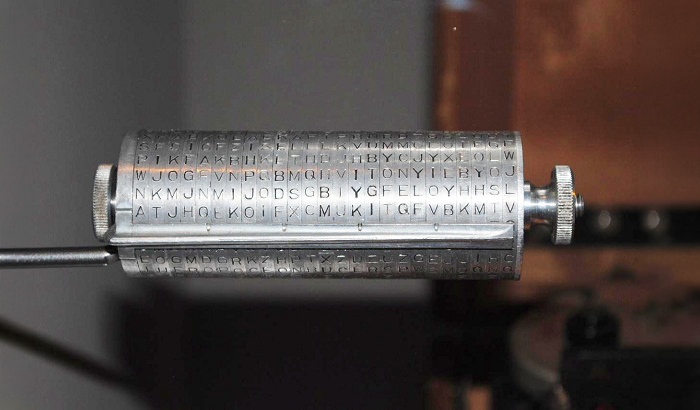
The M-94 was a cipher device used by the United States Army. It is the only cipher cylinder that was manufactured in significant numbers. Officially adopted in 1922, it remained in use until circa 1942.

A variant of the M-94 in the National Cryptologic Museum

The M-136was a successor to the M-94 cipher device. However, it never progressed beyond the experimental stage. This example is preserved at the National Cryptologic Museum.
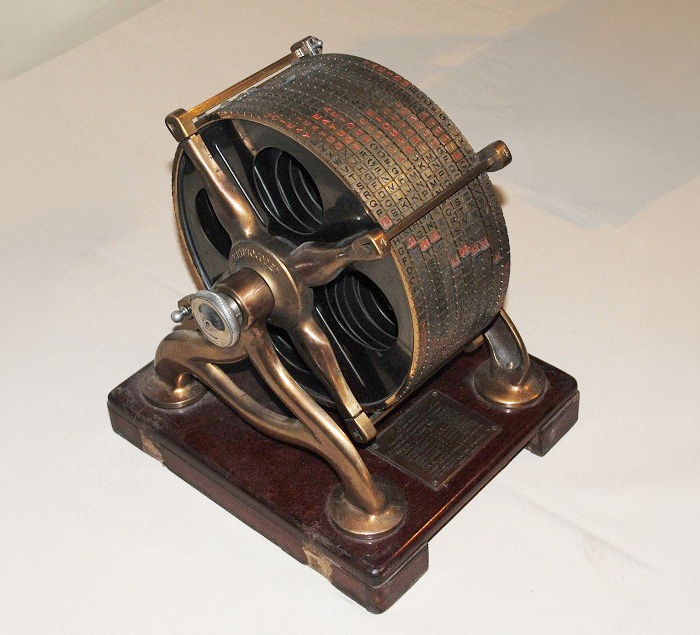
This cipher cylinder named Cryptocode was produced in 1928. Vowels are always encrypted as vowels, and consonants are always encrypted as consonants. As a result, the ciphertext remains pronounceable despite being enciphered.
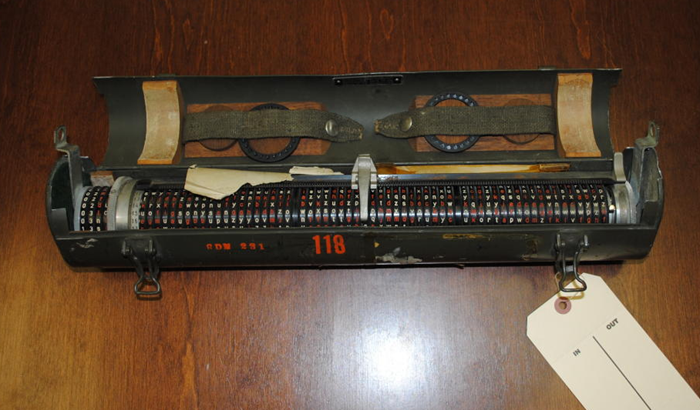
This cipher cylinder presumably dates from the Second World War. It was manufactured by Heimsoeth & Rinke, the company that also produced the Enigma. Unfortunately, little else is known about this device.
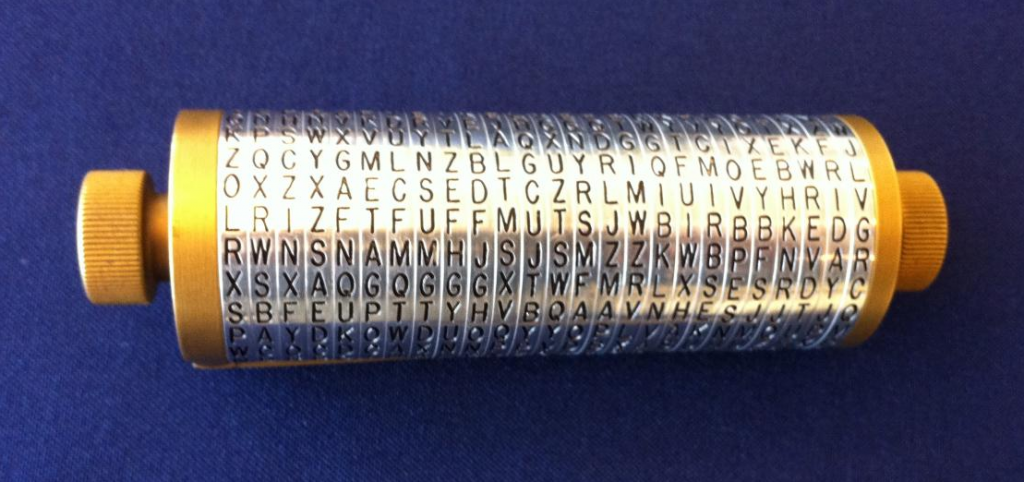
A cipher cylinder at the National Cryptologic Museum
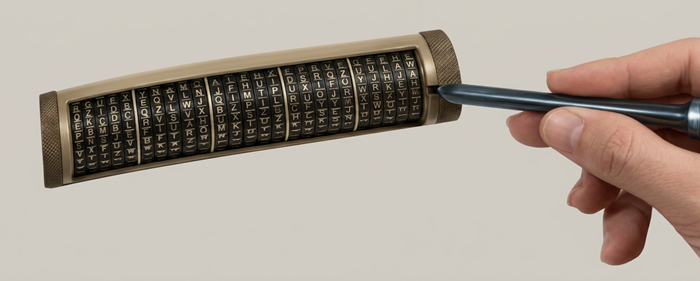
The Front-Chiffriergerät was introduced into the Swiss Armed Forces around 1946.
Source: AI-generated

A toy cipher cylinder at the National Cryptologic Museum

The American writer Cory Doctorow had this cipher cylinder made into a wedding ring.
A contest was held to find the best applications for this device.
Source: AI-generated
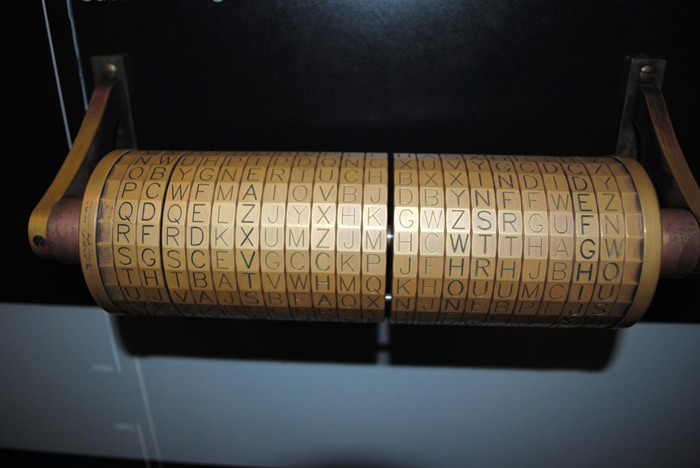
A cipher cylinder at the Heinz Nixdorf MuseumsForum in Paderborn.
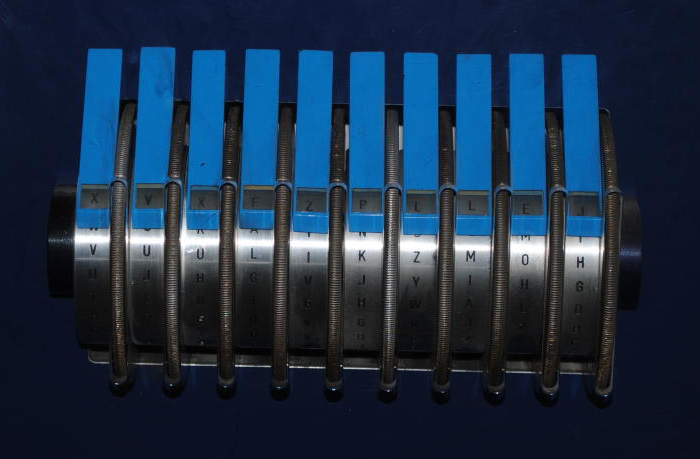
A cipher cylinder at the Deutsches Museum in Munich
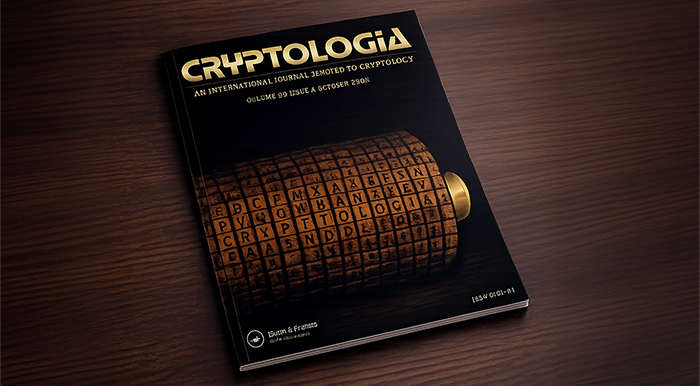
The cipher cylinder has become a symbol of cryptography in general.
For example, a cipher cylinder is depicted on the cover of the journal Cryptologia.
Literature
Back to Crypto Galleries