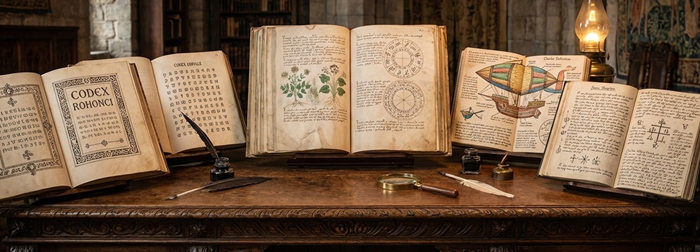
Encrypted books
My Encrypted Book List contains well over 100 books. This gallery presents some of the finest and most fascinating examples, each accompanied by its corresponding list number. Although my list includes a large number of encrypted diaries, they have not been included in this gallery. I plan to create a separate gallery dedicated exclusively to encrypted diaries at a later date.
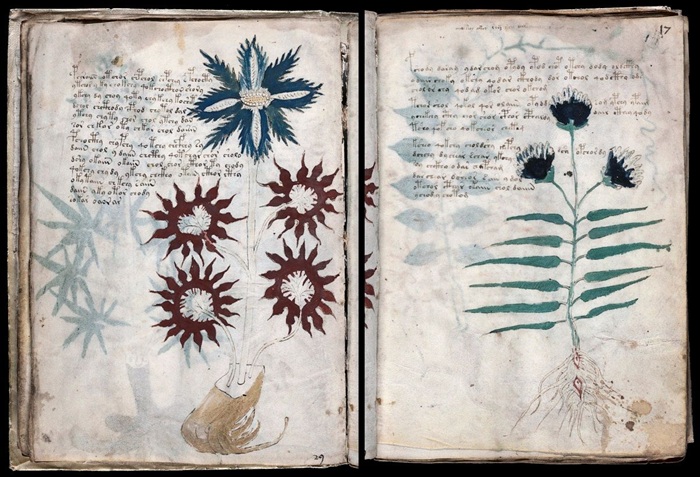
The Voynich Manuscript (00001) is the most famous encrypted book and arguably the most well-known unsolved encrypted text in the world. Its author, place of origin, and exact date of creation remain unknown, although radiocarbon dating has shown that the parchment was produced in the early 15th century. The manuscript is written in a unique script of apparent European origin that has not been found anywhere else. Despite numerous attempts by cryptographers, linguists, historians, and amateur researchers, the text has never been successfully deciphered.
Source: Beinecke Library
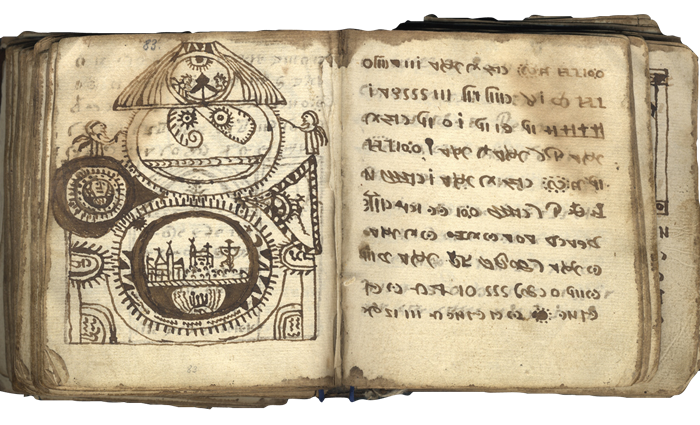
The Codex Rohonczi (00002) is a manuscript consisting of 448 pages filled with an unknown script and numerous drawings depicting religious scenes. Its origin and author remain uncertain. The codex takes its name from the town of Rohonc (now Rechnitz, Austria), where it was kept before being donated to the Hungarian Academy of Sciences in 1838. The manuscript employs an unusually large set of symbols, far exceeding the size of any ordinary alphabet. For more than a century, the manuscript resisted all attempts at decipherment. However, a solution proposed by Király and Tokai is now regarded by many specialists as correct. According to their findings, the text is written in a variant of the Romanian language and contains primarily religious content.
Source: Hungarian Academy of Sciences
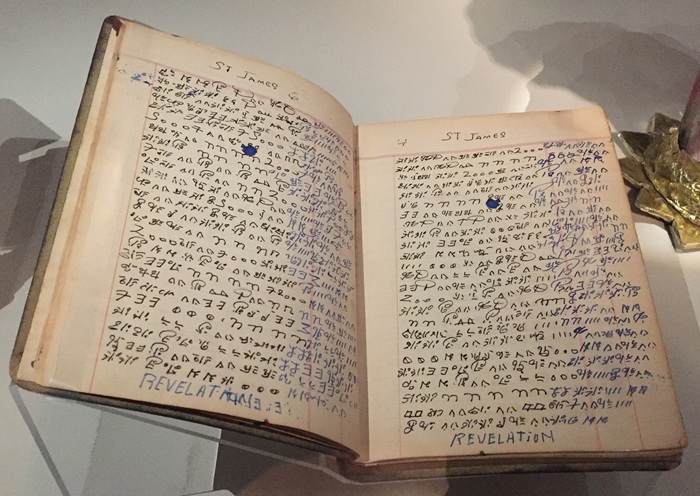
The encrypted notebook of American artist James Hampton (1909–1964) is also among the most famous encrypted books (00003). To this day, its contents remain undeciphered. During his lifetime, Hampton created only one major work of art: the installation [insert title here]. His encrypted notebook is considered his second remarkable creation. Written in a mysterious script of his own design, the notebook has attracted the attention of researchers and codebreakers for decades. Despite numerous attempts to interpret the text, no convincing decipherment has yet been achieved.
Check here for page scans.
Source: Smithonian Archive
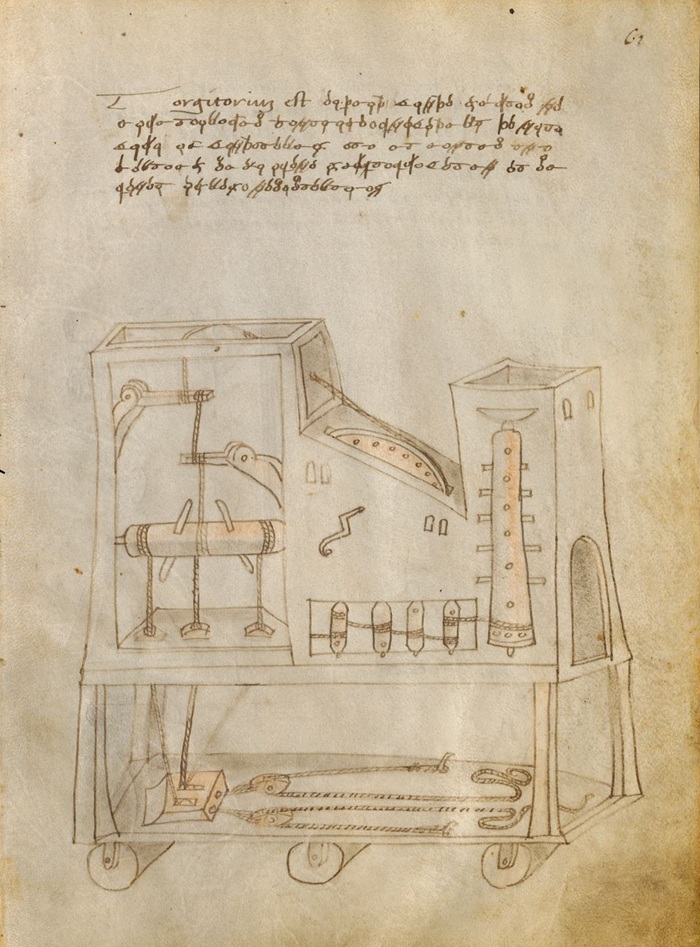
Bellicorum Instrumentorum (“Book of War Instruments”) was written around 1420 by the Italian engineer and physician Giovanni Fontana (00029). It contains more than one hundred drawings of military devices, mechanical inventions, automata, hydraulic machines, and other technological concepts. Some of the designs appear remarkably advanced for their time.
Parts of the accompanying text are written in a substitution cipher that replaces ordinary letters with specially designed symbols. Although the cipher is relatively simple, it helped conceal technical details and added an aura of secrecy to the work.
Check here for page scans.
Source: State Library of Bavaria
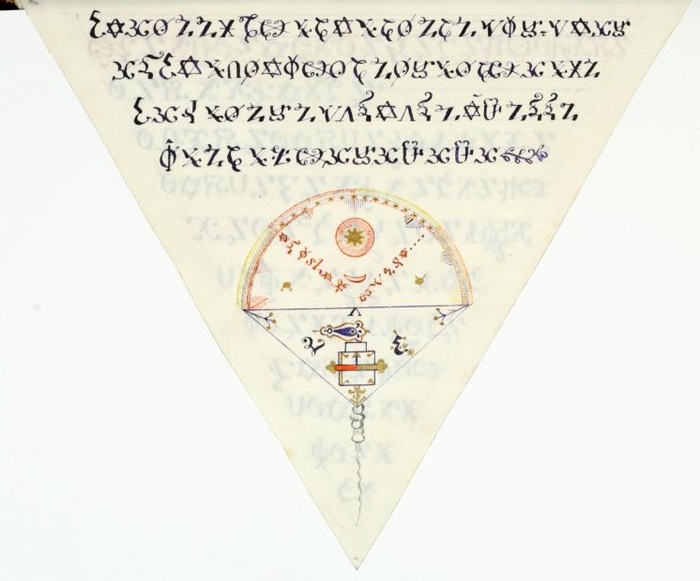
The Triangular Book of St. Germain (00050) is an eighteenth-century manuscript written in cipher. Its parchment leaves and binding are shaped as an equilateral triangle. The manuscript is traditionally associated with the mysterious Count of St. Germain, an adventurer, diplomat, and occultist.
The encrypted text is accompanied by several colorful diagrams and magical illustrations. The cipher has been deciphered, revealing instructions for ritual and magical operations rather than alchemical or scientific secrets.
Check here for page scans.
Source: Manly Palmer Hall collection of alchemical manuscripts
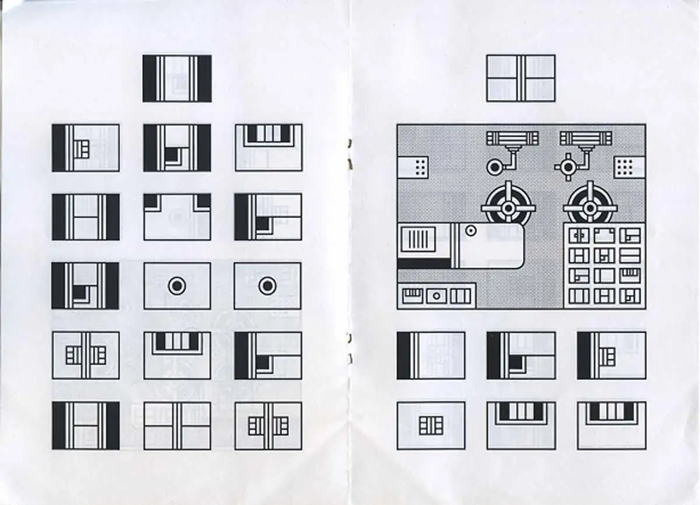
The Cylob Cryptogram (00056) is a 20-page booklet that musician Cylob (Chris Jeffs) reportedly received as a free gift in a London bookshop around 1995. It is entirely unclear what the strange symbols and diagrams contained in this work are meant to represent. To date, no convincing interpretation has been proposed. It is possible that the booklet was created as a work of art rather than as a meaningful encrypted text, and that it was never intended to convey a deeper message.
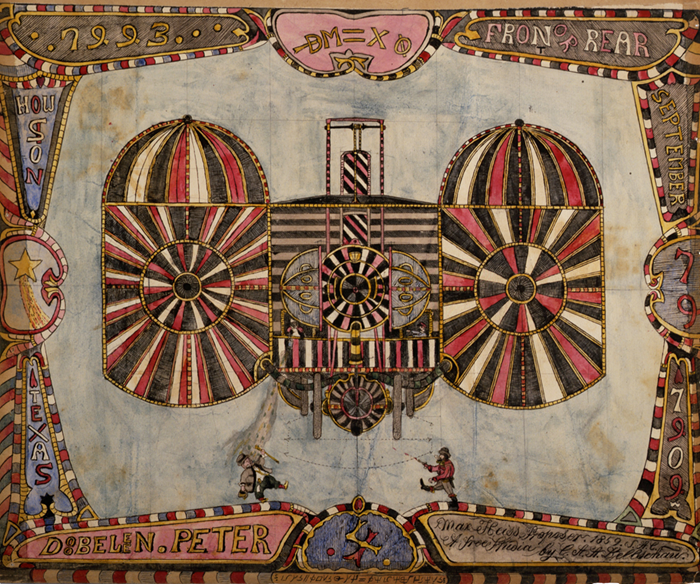
Between 1899 and 1923, the German-American outsider artist Charles Dellschau created a series of at least thirteen large handmade books (00084) containing more than 2,500 drawings, collages, and paintings. Most of the illustrations depict fantastical flying machines, airships, and balloons connected to an organization called NYMZA, which Dellschau claimed had developed advanced aviation technology.
The books are also notable for their numerous encrypted text passages. Dellschau employed a simple substitution cipher, replacing ordinary letters with specially designed symbols. Although the cryptograms attracted little attention for many years, the cipher has since been solved, revealing a mixture of English and German commentary related to the illustrated aircraft and the supposed activities of NYMZA.
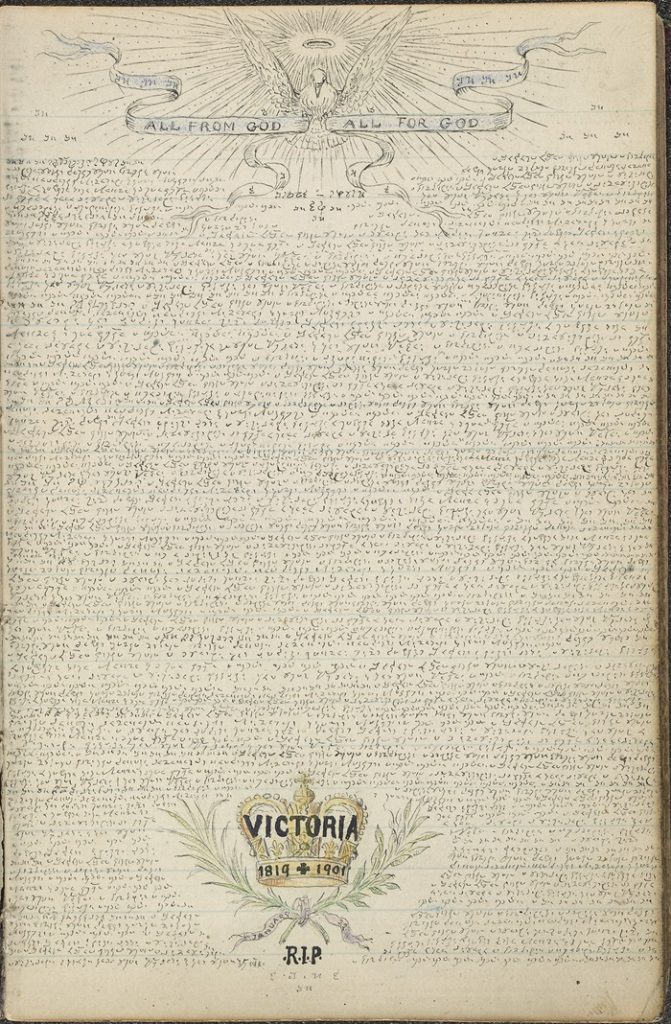
The encrypted journal of Ernest Rinzi (00088) is one of the most remarkable cryptographic manuscripts ever created. Rinzi (1836–1909), a London-based jeweller, goldsmith, and miniature painter, filled more than 170 pages with tiny encrypted writing, elaborate illustrations, and religious symbolism. The manuscript is written in a secret alphabet of Rinzi’s own design, combining invented characters with symbols borrowed from other writing systems.
Check here for page scans.
Source: Rare Book & Manuscript Library at the University of Illinois at Urbana-Champaign
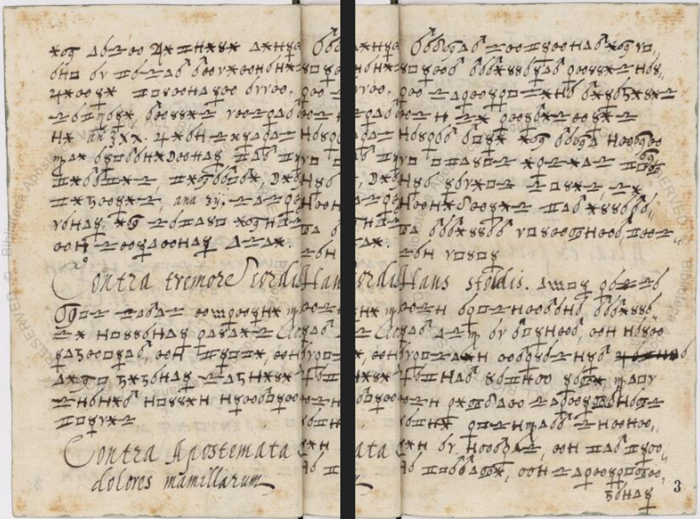
The Borg Manuscript (00099) is an encrypted book preserved in the Vatican Library. Written in the 17th century, the 408-page tome is encoded using a system of unusual symbols, Roman letters, and diacritical marks. For more than four centuries, its contents remained inaccessible despite numerous attempts at decipherment. The manuscript was finally deciphered by a team of researchers using a combination of traditional cryptanalysis and AI. The decrypted text turned out to be a collection of medical remedies, treatments for diseases, and pharmaceutical knowledge, written primarily in Latin with some Italian passages. The cipher appears to have been intended to conceal this information from unauthorized readers at a time when certain forms of medical practice could attract suspicion.
Source: Vatican Library
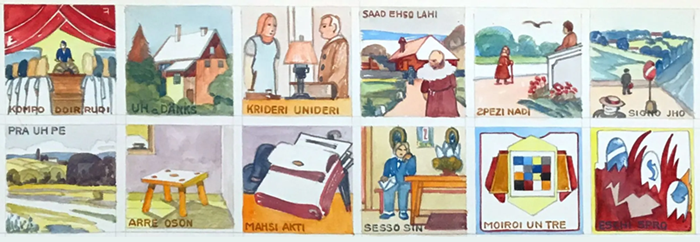
The Europa Redux Manuscript (00102) was created during the Second World War, probably between 1941 and 1945. It consists of thousands of illustrations accompanied by pronounceable but meaningless words. Neither the author nor the purpose of the work has been identified.
The drawings depict a wide variety of subjects, including architecture, landscapes, maps, historical scenes, and technical objects. Many of the images appear to relate to Europe and its history.
Check here for page scans.
Source: Honey & Wax Bookseller
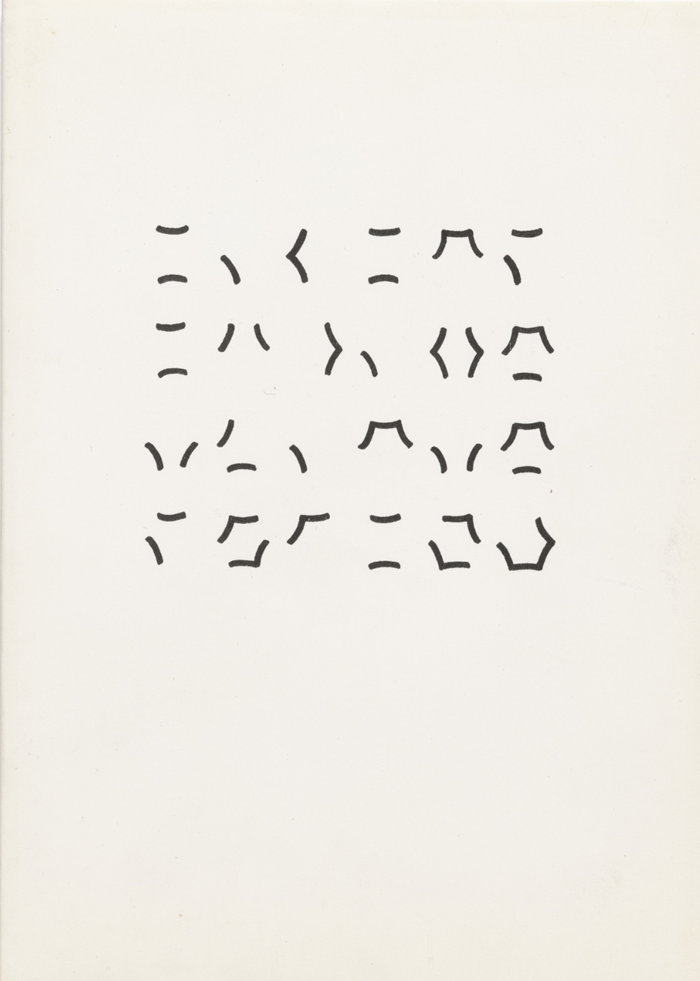
A Captain from Portugal (00112) is an encrypted artist’s books. Created in 1972 by the French-American conceptual artist Guy de Cointet (1934-1983), the book consists almost entirely of mysterious symbols, invented alphabets, diagrams, and other cryptic elements. At first glance, it appears to be completely unreadable, blurring the boundaries between visual art, literature, and cryptography. Several of its encoded texts have been deciphered by independent researchers, revealing passages derived from literary sources and demonstrating that at least part of the work contains genuine encrypted messages rather than meaningless symbols. Nevertheless, some sections of the book are still not fully understood.
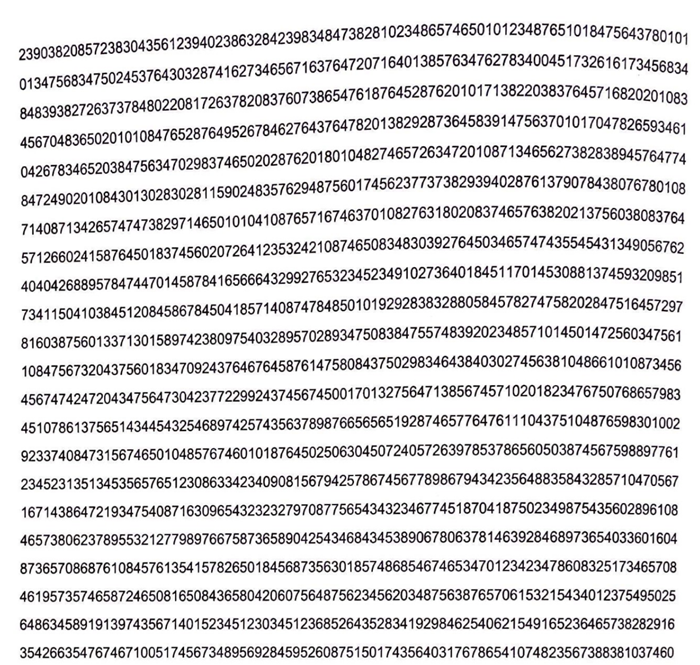
Arcturus (00116) is a 27-page book published in 2021 by Robert Crimo, the man later convicted in connection with the Highland Park mass shooting that took place on July 4, 2022. The book consists almost entirely of numerical sequences. Apart from the title, author information, and a small symbol, it contains no explanatory text. David Oranchak, one of the three solvers of the Zodiac Killer’s 340-character cipher, drew attention to Acturus shortly after the Highland Park attack.
Numerous attempts have been made to identify the underlying encryption method, but no generally accepted solution has emerged.
Anton Hoyer conducted a statistical analysis of the numerical text. His findings suggested that the content may not be an actual ciphertext at all, but rather a manually generated sequence of numbers without meaningful encrypted content.
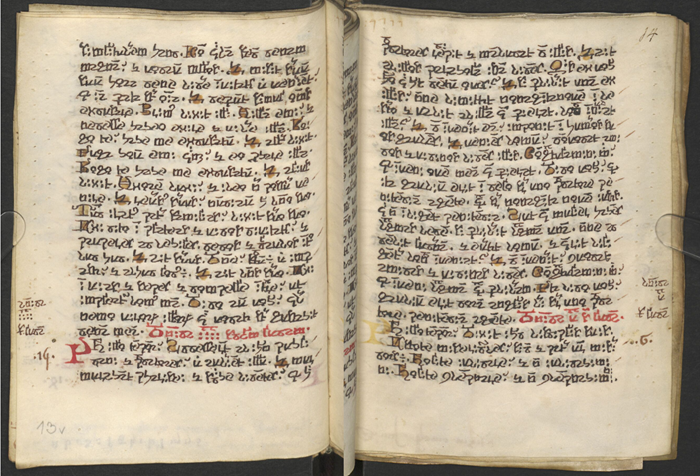
The Lectionarius (00131) is an encrypted book preserved in the collections of the Austrian National Library. The purpose of this encryption remains uncertain. It may have been intended to protect theological, liturgical, or personal information from unauthorized readers, or simply to demonstrate the author’s cryptographic skills.
Source: Austrian National Library
Back to Crypto Galleries